


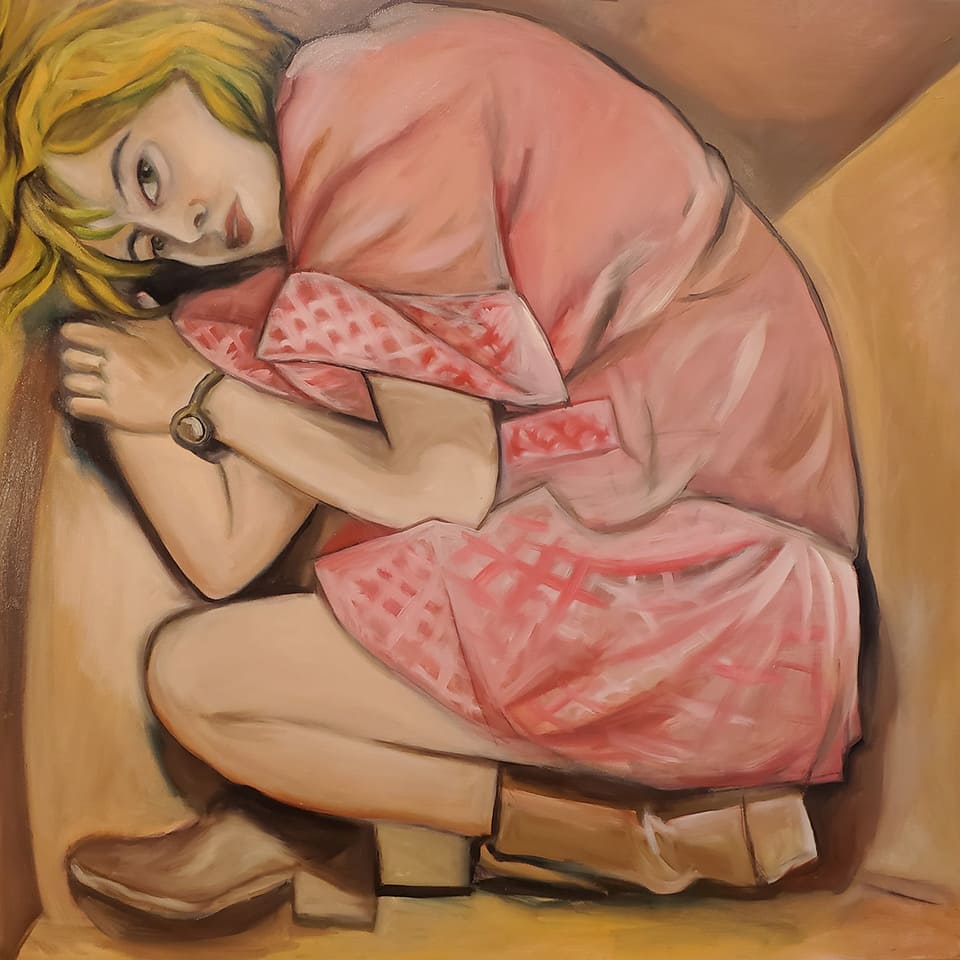
Barbara Pollak-Lewis grew up in a quiet suburban town in New York, raised within a traditional nuclear family environment that subtly yet powerfully shaped her artistic sensibilities. Her earliest exposure to creativity came from her mother, a designer whose aesthetic choices transformed their home into a curated space filled with mid-century modern furniture, abstract art, and shelves of photography and architecture books. This visually rich environment nurtured Barbara’s imagination and introduced her to the idea that art could be both lived and experienced daily.
From a young age, she absorbed the visual language of design, composition, and storytelling. These early influences would later resurface in her work through her attention to form, structure, and emotional depth. Her fascination with imagery and narrative led her to pursue formal education at the Rhode Island School of Design, where she studied experimental film and animation. This training expanded her understanding of movement, fragmentation, and visual storytelling, elements that continue to inform her artistic approach today.
The Influence of Pop Culture and Feminist Perspectives
Pollak-Lewis’s work is deeply rooted in the visual and psychological impact of pop culture. Her subject matter often draws from retro imagery, housewives frozen in time, dirty ashtrays, and TV dinners, symbols that evoke nostalgia while simultaneously critiquing societal expectations. These familiar yet unsettling motifs create a tension between comfort and discomfort, inviting viewers to question the narratives embedded within everyday life.
Her artistic voice is further shaped by the influence of bold feminist artists such as Louise Bourgeois and Alice Neel. Like these pioneers, Pollak-Lewis explores themes of identity, vulnerability, and the female experience. Her work often confronts the complexities of womanhood, addressing issues of confinement, emotional expression, and societal pressure.
Through portraits of individuals screaming, figures trapped in boxes, and fragmented collages, she challenges viewers to confront uncomfortable emotions. Her distorted underwater portraits, in particular, evoke a sense of suffocation and disorientation, symbolizing the struggle to navigate identity within restrictive environments.
A Career Rooted in Art and Education
For over three decades, Barbara Pollak-Lewis has lived and worked in San Francisco, California, where she has built a multifaceted career as an illustrator, curator, and arts educator. Her long-standing presence in the artistic community reflects her dedication not only to creating art but also to fostering creativity in others.
Her work has been exhibited nationally, earning recognition for its emotional intensity and conceptual depth. As a curator, she has contributed to shaping artistic dialogue, while her role as an educator has allowed her to mentor emerging artists and encourage new perspectives.
This combination of practice and teaching has enriched her own work, as she continuously engages with evolving ideas and diverse voices. Her art remains dynamic, reflecting both personal introspection and broader cultural conversations.
The (BOX)ed Series: A Study of Confinement and Identity
One of Pollak-Lewis’s most compelling bodies of work is her series titled (BOX)ed. This collection focuses on young women between the ages of 12 and 23, each depicted within the limited space of a box. The box serves as a powerful metaphor for the physical and psychological constraints that shape identity, particularly during formative years.
Each subject within the series responds differently to their confinement. Some figures appear to push against the boundaries, their bodies tense and strained as they attempt to break free. Others seem to retreat inward, finding a sense of comfort or protection within the enclosed space. This duality reflects the complexity of human experience, how the same environment can feel both restrictive and safe, depending on one’s perspective.
Through these paintings, Pollak-Lewis explores her own sense of identity and physical limitation. The series becomes a deeply personal investigation, as well as an empathetic study of others. By portraying these young women at a vulnerable stage in their lives, she captures the tension between self-discovery and societal expectation.
Emotional Resonance and Visual Language
What makes the (BOX)ed series particularly striking is its emotional resonance. Pollak-Lewis uses composition, color, and form to convey a sense of claustrophobia and introspection. The confined space of the box forces the viewer to focus intensely on each subject, amplifying their emotional state.
Her background in experimental film and animation is evident in the way she constructs these scenes. There is a cinematic quality to her work; each painting feels like a still frame from a larger narrative. The fragmentation and distortion present in her broader body of work also appear here, reinforcing the idea that identity is not fixed but constantly evolving.
The use of the box as a recurring motif creates a visual language that is both simple and profound. It becomes a symbol of the body, the mind, and the societal structures that shape our experiences. By limiting the physical space, Pollak-Lewis expands the emotional and conceptual depth of her work.
Themes of Empathy and Understanding
At its core, the (BOX)ed series is about empathy. Pollak-Lewis does not present her subjects as passive victims of confinement but as individuals navigating their own relationships with limitation. Each figure embodies a unique response, encouraging viewers to consider their own experiences of restriction and freedom.
This emphasis on empathy extends beyond the series to her entire body of work. Whether depicting fragmented portraits or nostalgic pop culture imagery, Pollak-Lewis invites viewers to look beyond the surface and engage with the emotional realities of her subjects.
Her art becomes a space for reflection, a place where discomfort can lead to understanding, and where vulnerability is not something to be hidden but explored.
Continuing Impact and Artistic Vision
Barbara Pollak-Lewis continues to create work that challenges, provokes, and resonates. Her ability to blend personal narrative with universal themes ensures that her art remains relevant and impactful. By drawing on her early influences, feminist perspectives, and decades of experience, she has developed a distinctive voice that speaks to the complexities of identity and human experience.
The (BOX)ed series stands as a testament to her ongoing exploration of these themes. It captures the delicate balance between confinement and comfort, individuality and expectation, vulnerability and strength. Through her work, Pollak-Lewis reminds us that even within limited spaces, there is depth, emotion, and the possibility of transformation.
Her art does not offer easy answers but instead encourages dialogue, inviting viewers to question, to feel, and to see themselves reflected in the figures she so thoughtfully portrays.
