


Geneviève Fraysse is a French artist whose work celebrates the beauty of nature, history, and the landscapes of southern France. Through expressive colors and spontaneous techniques, she captures scenes that reflect both the physical environment and the emotional atmosphere of the places she paints. Her art is rooted in observation, authenticity, and a strong connection to the natural world.
Inspired by the landscapes of Occitanie and Provence, Fraysse’s paintings reveal a deep appreciation for the quiet poetry of everyday scenery. Whether depicting marshlands, historic structures, or sunlit countryside views, she creates works that invite viewers to slow down and experience the subtle beauty of the world around them.
Artistic Training and Development
Geneviève Fraysse began her artistic journey with ten years of training in acrylic and watercolor painting. During this time, she developed a solid understanding of composition, color relationships, and observational drawing. This formal foundation gave her the technical skills needed to explore a variety of artistic directions.
While she studied acrylic and watercolor in a structured environment, Fraysse expanded her artistic practice independently. She is self-taught in oil painting, palette-knife techniques, and soft pastel. This combination of formal training and personal experimentation has shaped her unique artistic voice.
Learning new mediums on her own allowed her to develop a more intuitive relationship with materials. Instead of strictly following academic methods, she experimented freely with textures, surfaces, and gestures, gradually refining her style.
Among the mediums she uses, soft pastel has become one of her most beloved forms of expression. The richness of pigment and the tactile experience of working with pastel perfectly complement her spontaneous and expressive approach to painting.
Plein Air Painting and the Practice of Painting from Life
Since 2011, Geneviève Fraysse has been practicing plein air painting, a method that involves creating artwork outdoors directly in front of the subject. This approach allows artists to capture natural light, atmosphere, and movement in real time.
Painting outdoors requires patience and adaptability. Light changes quickly, colors shift with the weather, and natural elements constantly evolve. Fraysse embraces these challenges because they bring authenticity and life to her work.
Her artistic process often follows the alla prima method, in which a painting is completed in a single session while the colors remain fresh and vibrant. This technique encourages spontaneity and allows the artist to respond directly to what she observes.
She also works “sur le motif,” a French expression meaning painting directly from life. This tradition has been practiced by many great landscape painters and emphasizes careful observation of the real environment. By working in this way, Fraysse captures the true character of the landscapes she paints.
Inspiration from Southern France
The landscapes of Occitanie and Provence play a central role in Geneviève Fraysse’s artistic inspiration. These regions of southern France are known for their rich natural beauty, dramatic skies, and historic architecture.
Her paintings often portray marshes, countryside scenery, and quiet natural spaces that reveal the harmony between land, water, and light. Through her figurative style, she highlights recognizable places while enhancing their atmosphere through color and texture.
Fraysse’s work celebrates the living world. Plants, landscapes, and natural environments are treated with respect and admiration. Rather than focusing on dramatic or complex compositions, she often chooses simple scenes that allow viewers to appreciate subtle details and moods.
This connection to nature reflects her desire to elevate everyday landscapes and show their timeless beauty.
Artistic Community and Recognition
Geneviève Fraysse is actively involved in artistic communities that value tradition, heritage, and the continued development of contemporary art.
Since 2011, she has participated each year in the “Journées des Copistes” at the Albert André Museum in Bagnols-sur-Cèze. Organized by the Museums Conservation of Gard, this event allows artists to study and reinterpret works within the museum collection, strengthening the link between historical art and modern creativity.
She is also a member of the “Friends of the Painter Albert André” association. Albert André, who was a close friend of the Impressionist painter Pierre-Auguste Renoir, played an important role in French art history. The association works to promote his legacy and maintain interest in his artistic contributions.
In addition, Fraysse belongs to “Art du Pastel en France,” an organization dedicated to promoting pastel painting and supporting artists who specialize in this expressive medium.
Her artistic recognition has continued to grow. Since 2021, her work has been officially listed in the AKOUN Guide, a respected reference that documents the market value and recognition of contemporary artists.
The Artwork: The Carbonnière Tower in the Camargue
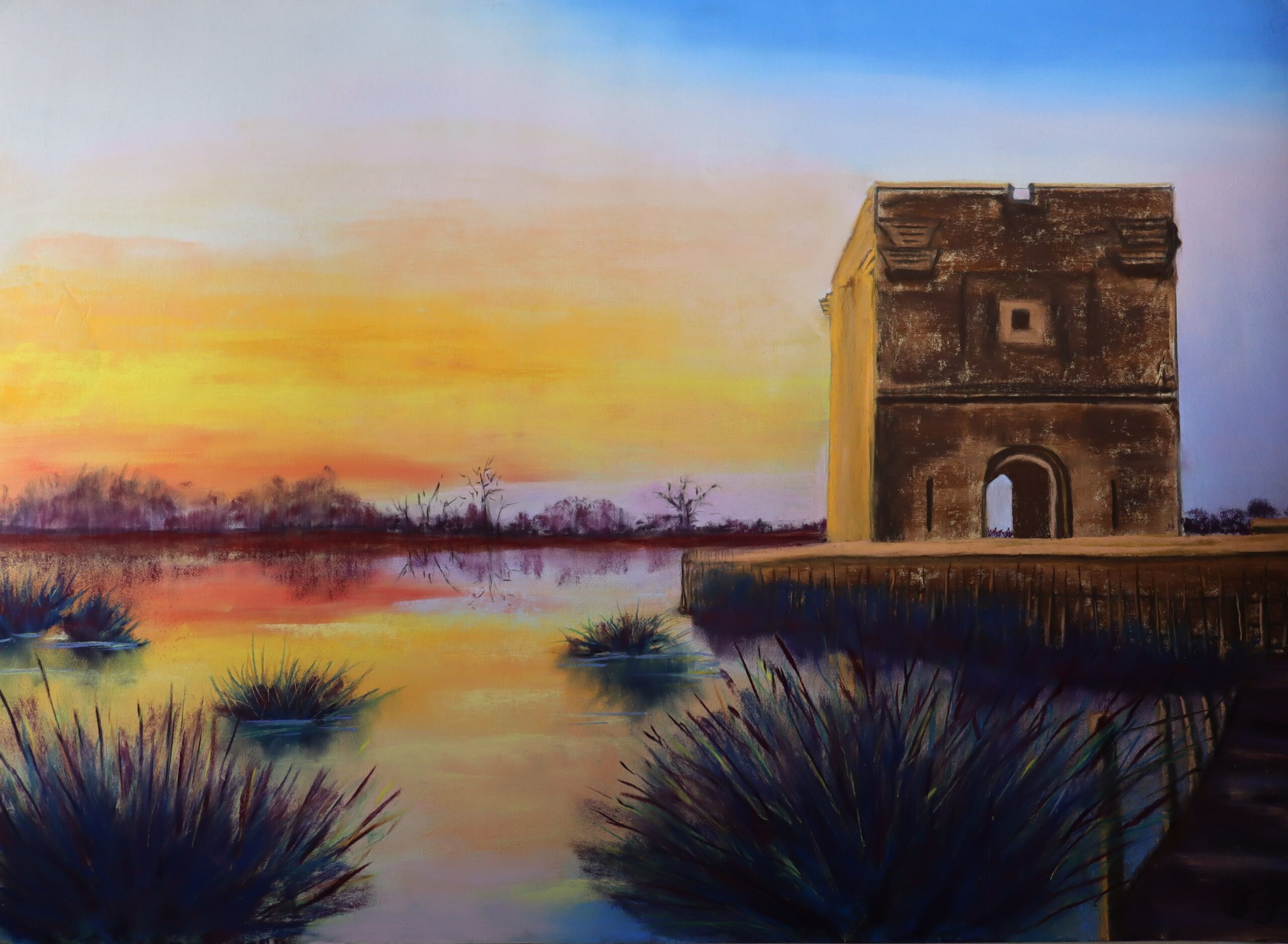
One of Geneviève Fraysse’s works is a pastel painting titled The Carbonnière Tower in the Camargue, created in 2025. Measuring 50 cm by 70 cm, the artwork presents a striking view of a historic monument surrounded by the wild beauty of the Camargue wetlands.
The Carbonnière Tower dates back to the late thirteenth century and has been classified as a Historic Monument since 1903. Located in the Camargue region of southern France, the tower offers a remarkable vantage point from which visitors can observe the diverse wildlife and vegetation of the area.
For this artwork, Fraysse painted the surrounding marshes directly from life. By observing the natural environment closely, she was able to capture the textures, reflections, and atmosphere of the wetlands.
While the landscape itself was painted from observation, the artist imagined a sunset illuminating the scene. Warm tones of evening light enhance the atmosphere and give the historic tower a peaceful and almost timeless presence within the landscape.
The result is a painting that combines real observation with poetic interpretation.
The Sensual Quality of Soft Pastel
Soft pastel plays an important role in the emotional quality of Geneviève Fraysse’s work. This medium allows the artist to apply pure pigment directly to the surface, producing vibrant colors and delicate transitions.
Unlike traditional painting tools that rely on brushes, pastel often involves direct contact with the artist’s hands. Fraysse particularly enjoys this tactile experience, describing it as similar to painting with one’s fingers.
The softness of the material allows colors to blend naturally, creating smooth gradients and atmospheric effects. This quality makes pastel especially suitable for capturing natural landscapes, light, and reflections.
For Fraysse, the medium offers both technical flexibility and sensory pleasure, allowing her to express her connection to nature in a very personal way.
A Poetic Vision of Nature
Geneviève Fraysse’s work stands as a tribute to the beauty of nature and the landscapes of southern France. Through her dedication to plein air painting and her love of pastel, she creates artworks that reflect both observation and imagination.
Her paintings invite viewers to pause and appreciate the harmony between natural environments and historical landmarks. By capturing moments of light, atmosphere, and stillness, she transforms familiar places into scenes filled with quiet emotion.
Through works like The Carbonnière Tower in the Camargue, Fraysse continues to celebrate the relationship between nature, history, and artistic expression, offering a poetic vision of the landscapes that inspire her.
