


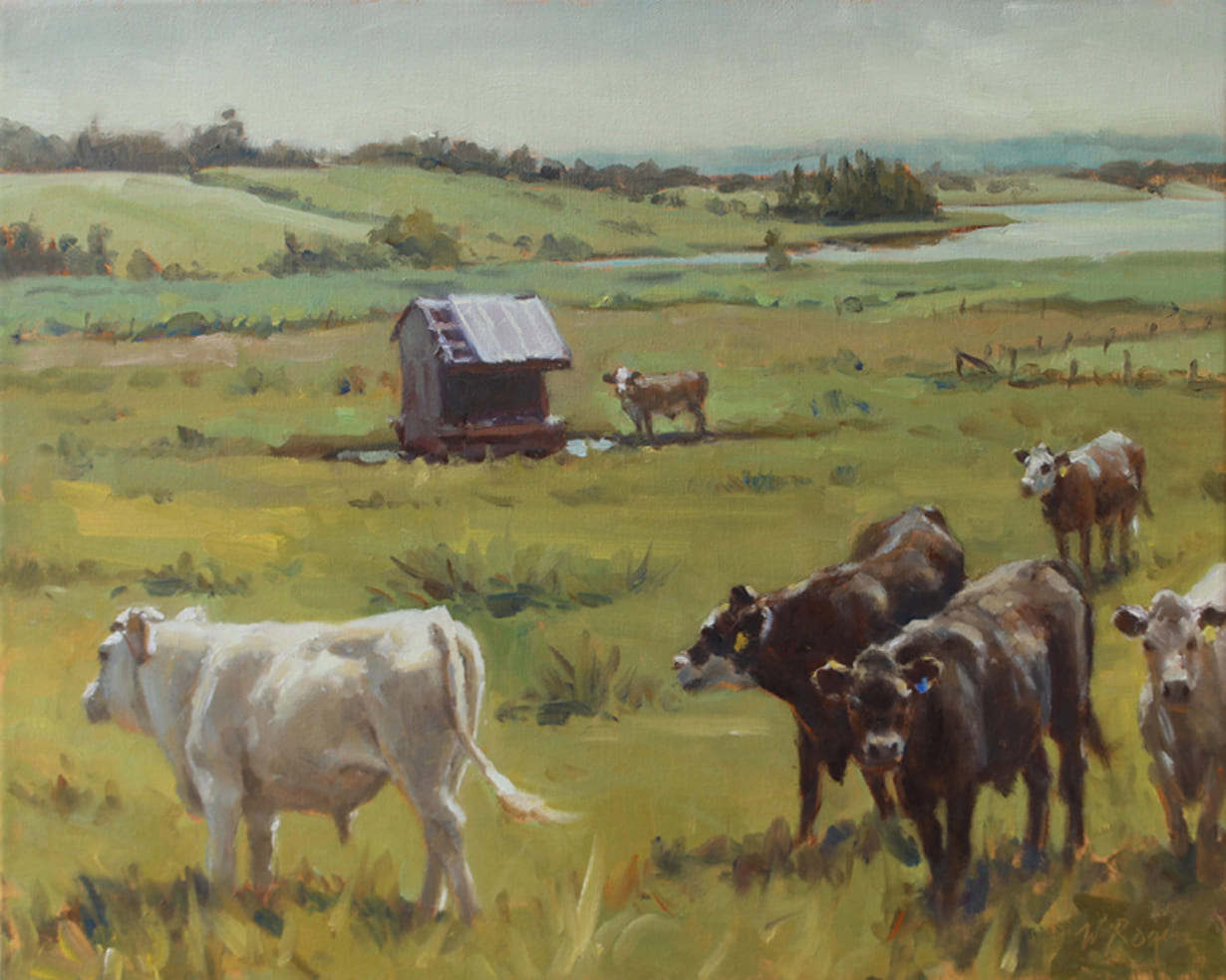
William Rogers AWS TWSA CSPWC OPA NOAPS ASMA is a distinguished multi-media artist from Nova Scotia whose career reflects a deep commitment to observation, craftsmanship, and the living tradition of representational art. Working across charcoal, oil, watercolor, pastels, and original printmaking, Rogers has developed a body of work that is both wide-ranging in subject and unified by a strong foundation in drawing and painting from life. His art captures the immediacy of real experience, whether in the quiet presence of a figure, the movement of animals, or the shifting light of a landscape.
Throughout his career, Rogers has earned respect for his technical fluency and for his ability to translate lived moments into compelling visual statements. His practice is rooted in direct engagement with the world, and this authenticity is one of the defining qualities that sets his work apart.
Roots in Nova Scotia and the Discipline of Looking
Nova Scotia provides an inspiring backdrop for Rogers’ artistic life. The province’s coastal scenery, rural farms, and open landscapes offer constant visual stimulation. Rather than relying primarily on photographs, Rogers frequently chooses to work directly from life, placing himself in front of the subject and responding to it in real time.
Plein air painting is central to his process. Painting outdoors requires speed, adaptability, and careful observation. Light changes quickly, weather shifts, and conditions are rarely perfect. Yet these challenges are precisely what make plein air work so valuable. Rogers studies how light moves across forms, how colors shift throughout the day, and how atmosphere influences mood. These lessons carry into his studio work, giving his paintings a convincing sense of light and place.
His commitment to working from life extends to figure drawing and painting. By studying live models, he refines his understanding of anatomy, proportion, and gesture. This practice lends his figures a natural presence and credibility. Viewers sense that these are observed realities, not invented approximations.
A Broad and Lively Range of Subjects
Rogers is not limited to a narrow set of themes. His subjects include figures and portraits, landscapes, figures within landscapes, animals, and especially equine scenes. This variety keeps his work fresh and continually challenging. Each subject demands a different type of attention and problem-solving, and Rogers approaches them all with equal seriousness.
Horses occupy a significant place in his portfolio. His equine paintings often depict horse racing and training environments, where timing and movement are crucial. Capturing a horse in motion requires an understanding of anatomy and rhythm. Rogers conveys both the physical power and the elegance of these animals, often suggesting motion through confident, economical brushwork.
Cows are another recurring subject. While they are humble animals, Rogers treats them as worthy subjects for careful study. He looks at their structure, their markings, and the way light describes their forms. In his hands, everyday rural scenes become opportunities for strong design and painterly exploration. These works reflect a respect for ordinary life and a belief that beauty can be found in familiar places.
Working Across Mediums
Rogers’ practice spans several mediums, and this versatility strengthens his overall artistry. Each medium encourages a slightly different way of thinking and seeing. Oil painting allows him to build rich color relationships and develop form gradually. Watercolor pushes him toward clarity and decisiveness, since the medium is less forgiving and demands planning. Pastels offer immediacy and vibrant surface qualities, enabling him to respond quickly to visual impressions. Charcoal focuses attention on value, structure, and draftsmanship, reinforcing the foundation of drawing. Original printmaking introduces elements of design, layering, and process that further expand his visual language.
Because he moves between these mediums, Rogers avoids becoming formulaic. Skills learned in one area inform the others. His watercolors benefit from strong drawing, his oils benefit from confident value structures, and his prints reflect a painter’s sense of composition. The result is a well-rounded practice grounded in fundamentals.
Royal Recognition and International Visibility
A major milestone in Rogers’ career came in 2014 when he served as Royal Tour Artist to Prince Charles. This role placed him within a long-standing tradition of artists who document royal tours through direct observation and artistic interpretation. Such a position is both an honor and a responsibility. It requires the ability to work efficiently, capture key moments, and maintain high professional standards.
His experience as a Royal Tour Artist led to involvement in the book The Art of Royal Travel, Journeys with the King. This publication situates his work within a historical lineage of artists who have visually recorded royal journeys. It also introduced his work to a broader international audience.
His participation in the corresponding exhibition at Buckingham Palace in July 2025 marked another significant achievement. Exhibiting in such a setting signals a high level of recognition. In addition, having numerous works in the Royal Collection affirms the lasting value and institutional appreciation of his art.
“Whole Lotta Bull”: Composition and Light
One notable painting that reflects Rogers’ approach is Whole Lotta Bull, an oil on canvas. Although he often works directly from life, this piece was created in the studio using reference photos and sketches gathered during a painting trip to Prince Edward Island. Even in the studio, his process remains grounded in real observation.
For this painting, Rogers focused on designing a strong composition from his collected references. He did not simply copy what he saw but arranged elements to create visual harmony. His main goal was to achieve a pleasing composition while capturing the effect of light.
The cows in Whole Lotta Bull are treated as solid, sculptural forms. Light defines their volumes and creates a rhythm across the canvas. The painting feels calm yet purposeful, with each element contributing to the whole. It celebrates rural life without romanticizing it, emphasizing structure, atmosphere, and painterly quality. The work is currently available at McBride Gallery in Annapolis, Maryland, and stands as a good example of how Rogers merges field study with studio refinement.
A Commitment to Representational Tradition
Rogers works within the tradition of representational art, a tradition rooted in careful observation and technical skill. In a contemporary art world that often emphasizes concept over craft, his dedication to drawing and painting from life is both disciplined and refreshing. His work shows that realism can remain expressive, personal, and relevant.
The professional designations following his name reflect affiliations with respected art societies and organizations. These recognitions point to peer respect and sustained excellence rather than mere formality. They signal that his work meets high standards within the representational art community.
An Artist Still Looking Closely
William Rogers’ career is defined by attentiveness. He looks carefully at the world and translates what he sees with skill and sensitivity. Whether he is painting a royal event, a racing horse, a landscape, or a group of cows, he approaches the subject with curiosity and respect.
At the heart of his art is the act of seeing. He reminds viewers of the richness present in everyday life, in shifting light, in animal forms, and in the human figure. His work invites people to slow down and observe more closely.
For collectors and fellow artists, Rogers offers a strong example of how discipline, observation, and genuine engagement with subjects can build a meaningful and lasting artistic path. His journey shows that tradition and contemporary practice do not have to be opposites. In his hands, they work together, keeping the art of observation alive and evolving.
