


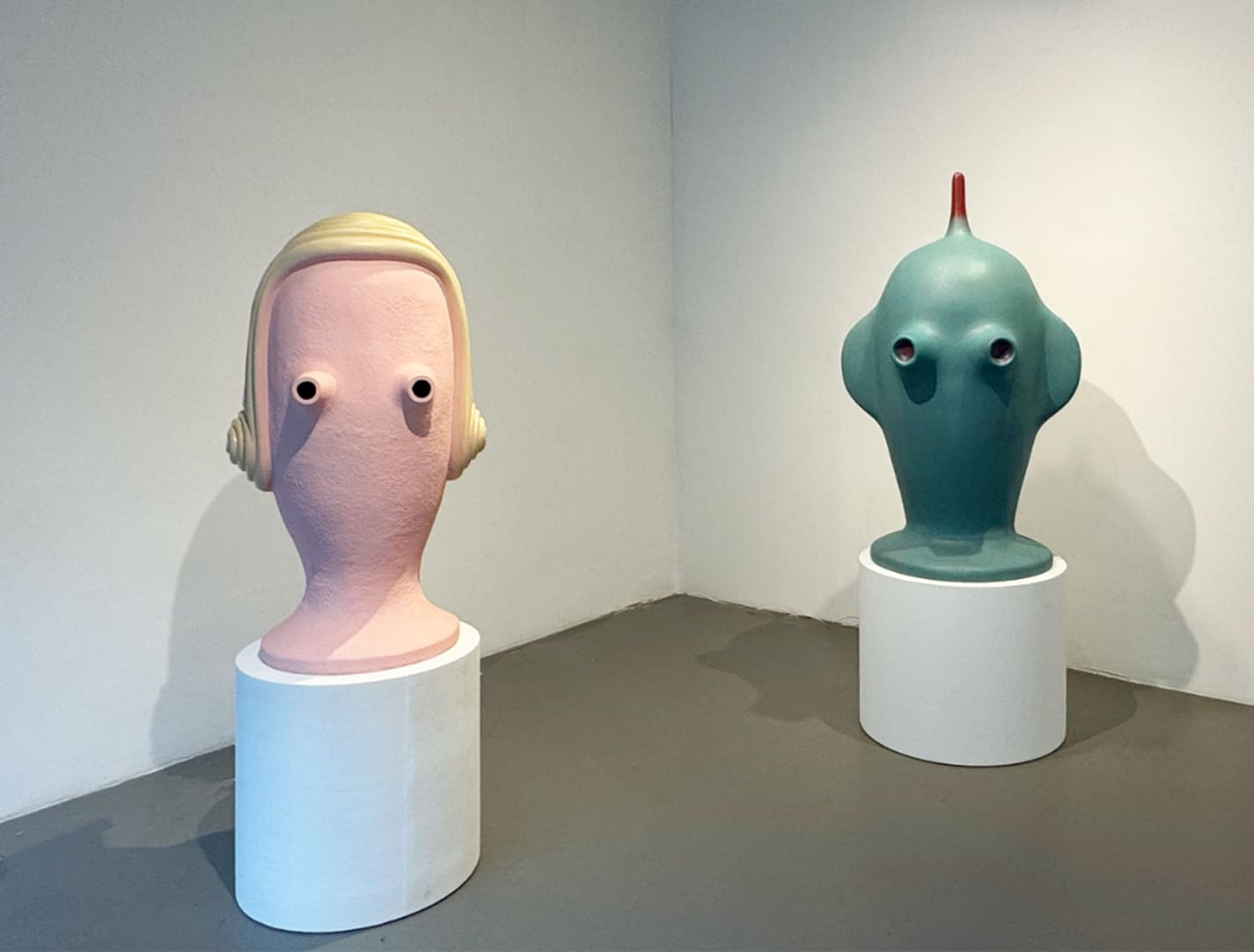
Jeanne Jaffe is a multidisciplinary artist whose work moves seamlessly across installation, sculpture, and stop motion animation. Her artistic practice is rooted in a deep intellectual engagement with language, literature, psychology, and history. Through these influences, Jaffe constructs works that challenge fixed definitions and invite viewers into spaces where identity and meaning remain in constant flux. Her art does not offer simple answers. Instead, it opens up questions about how we define ourselves and understand the world around us.
Artistic Background and Career
Over the course of her career, Jaffe has established herself as a significant voice in contemporary art. She has received numerous prestigious fellowships and grants, including support from the National Endowment for the Arts, the Gottlieb Foundation, the Pennsylvania Council on the Arts, the Mid-Atlantic Foundation, and the Virginia Groot Foundation. These recognitions reflect both the originality of her work and its impact within the broader artistic community.
Jaffe has held more than 20 solo exhibitions, demonstrating both consistency and evolution in her practice. Her most recent shows at L Space in New York City and Spinello Projects in Miami highlight her continued relevance and experimentation. In addition to gallery exhibitions, her work has been featured in respected museums such as the Mino Washi Museum in Japan, the Pennsylvania Academy of Art Museum in Philadelphia, the Woodmere Art Museum, the James A. Michener Art Museum, the Fuller Craft Museum, and the Hunterdon Art Museum.
Currently based in South Florida, Jaffe continues to develop her practice in a region known for its dynamic and diverse art scene. Her work reflects both a global perspective and a deeply personal inquiry into human experience.
Conceptual Foundations
At the core of Jaffe’s work is an exploration of identity as something fluid, mutable, and constantly shifting. Rather than viewing identity as fixed or stable, she approaches it as a process shaped by external influences and internal contradictions. This perspective is informed by her interest in disciplines such as psychology and literature, where identity is often portrayed as layered and complex.
Her work also engages with the idea of constructed reality. Jaffe questions how language, culture, and history shape our understanding of the world. By deconstructing familiar forms and narratives, she reveals the instability beneath what we often perceive as solid or certain. This conceptual approach allows her to create works that feel both intellectually rigorous and emotionally resonant.
Multidisciplinary Practice
One of the defining aspects of Jaffe’s work is her refusal to be confined to a single medium. She moves fluidly between installation, sculpture, and stop motion animation, using each medium as a tool to explore different dimensions of her ideas.
Her installations often create immersive environments that blur the boundaries between the viewer and the artwork. These spaces invite participation and reflection, encouraging viewers to become aware of their own role in constructing meaning. Her sculptures, on the other hand, frequently challenge traditional notions of form and material. They may appear familiar at first glance but reveal unexpected qualities upon closer inspection.
In her stop motion animation, Jaffe introduces movement and time as additional layers of complexity. These works often feel dreamlike, with shifting forms and narratives that resist linear interpretation. Through animation, she is able to explore transformation in a literal sense, showing how identity and meaning evolve moment by moment.
Liminality and Transformation
A central theme in Jaffe’s work is liminality, a state of being in between defined categories or conditions. Her art exists in this space of transition, where boundaries dissolve and new possibilities emerge. This focus on liminality allows her to challenge hierarchical structures and fixed classifications.
In Jaffe’s work, forms are rarely stable. Objects may appear to be in the process of becoming something else, or they may resist categorization altogether. This sense of instability is not presented as something negative. Instead, it becomes a source of creative potential. By embracing uncertainty, Jaffe opens up new ways of thinking about identity and reality.
Her work suggests that transformation is not only inevitable but also necessary. It is through change and instability that new meanings can arise. This perspective encourages viewers to reconsider their own assumptions and to remain open to alternative interpretations.
Viewer Experience
Engaging with Jaffe’s work is often an active and reflective process. Rather than presenting a fixed narrative, her artworks invite viewers to participate in the creation of meaning. This participatory aspect is particularly evident in her installations, where the physical presence of the viewer becomes part of the work itself.
Viewers may find themselves questioning what they are seeing and how they are interpreting it. This sense of uncertainty is intentional. Jaffe uses it as a way to disrupt habitual ways of thinking and to encourage deeper engagement. Her work does not aim to provide clarity but to provoke thought and exploration.
At the same time, her art often carries an emotional dimension. The shifting forms and ambiguous narratives can evoke feelings of curiosity, discomfort, or wonder. These emotional responses are integral to the experience of her work, reinforcing its themes of instability and transformation.
Redefining the Self and the World
Through her multidisciplinary practice, Jaffe redefines traditional ideas of the self, form, and reality. Her work challenges the notion that identity is singular or fixed, suggesting instead that it is shaped by a complex interplay of influences. Similarly, she questions the idea that the world is stable and easily understood.
By destabilizing familiar structures, Jaffe creates space for new interpretations and possibilities. Her work encourages viewers to think beyond conventional boundaries and to embrace complexity. In doing so, she contributes to a broader conversation about how we understand ourselves and our place in the world.
Conclusion
Jeanne Jaffe’s work stands as a powerful exploration of the fluid nature of identity and reality. Through her use of installation, sculpture, and animation, she creates works that challenge, provoke, and inspire. Her practice is grounded in a deep intellectual curiosity and a commitment to questioning established norms.
By operating within the space of liminality, Jaffe opens up new ways of thinking about the self and the world. Her work reminds us that meaning is not fixed but constantly evolving. In an increasingly complex and uncertain world, her art offers a compelling invitation to embrace change, question assumptions, and explore the unknown.
