


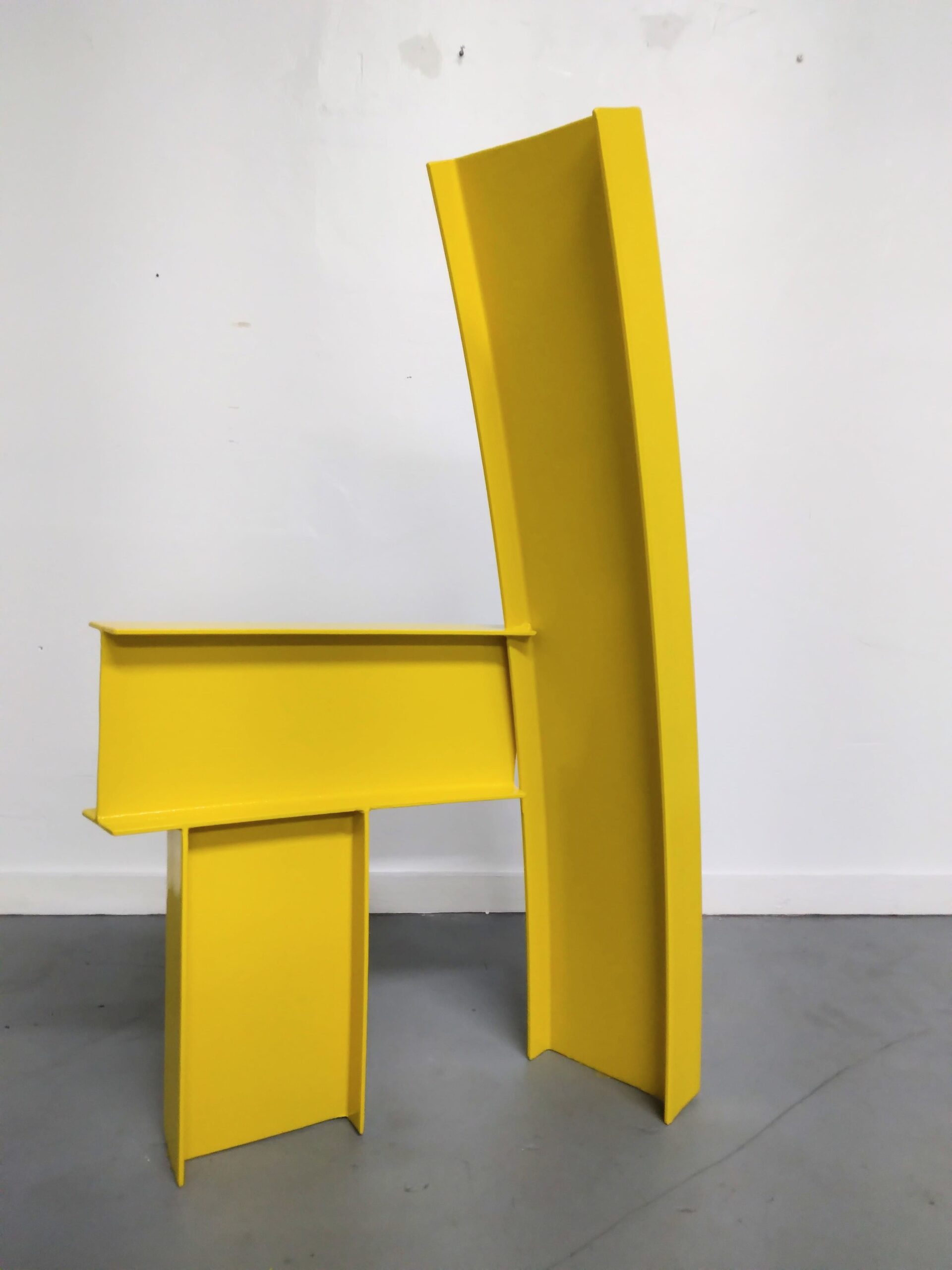
Timothy Carter has steadily carved a distinctive place within contemporary sculpture through his bold and unmistakable Yellow I-beam works. Recognized for transforming industrial materials into expressive, almost architectural forms, Carter’s sculptures stand at the intersection of strength and fluidity. Over the past decade, his practice has evolved from technical exploration to a refined artistic language, culminating in the striking body of work he is known for today.
Early Foundations and Artistic Beginnings
Timothy Carter’s journey into sculpture began in 2015 during a formative residency in South Florida. Immersed in an environment shaped by a well-known sculptor, he was introduced to the physical and conceptual demands of working with industrial materials. This period laid the groundwork for his understanding of structure, balance, and the expressive potential of steel.
Eager to expand his skills, Carter continued his training in New York, where he undertook a second residency as a steel sculptor apprentice. It was here that he deepened his technical expertise, learning to manipulate heavy materials with precision while developing a sensitivity to form. These early experiences were crucial in shaping his approach, blending craftsmanship with creative vision.
Pioneering a Signature Style
By 2018, Timothy Carter had begun working independently, marking a turning point in his artistic career. During this time, he pioneered what would become his signature: curved Yellow I-beam sculptures. Traditionally associated with rigid construction and industrial functionality, I-beams are rarely perceived as flexible or expressive. Carter challenged this perception by introducing curvature and rhythm into these otherwise linear forms.
The decision to use bright yellow was equally significant. The color, often associated with caution or visibility in industrial settings, became a defining visual element in his work. In Carter’s hands, yellow transforms the I-beam from a utilitarian object into a vibrant, almost playful sculptural presence. This juxtaposition between industrial weight and visual lightness gives his work its unique character.
The Process Behind the Sculpture
Carter’s sculptures are not only visually compelling but also technically sophisticated. Each piece begins with raw I-beams, which are carefully cured using hydraulic machines. This process allows the steel to be manipulated without compromising its structural integrity. Once treated, the beams are cut to precise measurements and assembled into their final sculptural forms.
The use of hydraulic machinery is central to Carter’s process. It enables him to bend and shape the steel in ways that would otherwise be impossible, creating smooth, sweeping curves that defy the material’s inherent rigidity. The assembly phase requires meticulous planning, as each component must align perfectly to achieve the intended balance and aesthetic.
Through this method, Carter transforms industrial fragments into cohesive compositions. The resulting sculptures often evoke movement, as though the steel itself has been animated. This dynamic quality is a hallmark of his work, inviting viewers to reconsider their relationship with industrial materials.
Exhibitions and Recognition
Carter’s Yellow I-beam sculptures have gained increasing recognition on the international stage. A notable milestone came in 2024, when one of his sculptures was featured at the MEAM Museum alongside artist Bisa Bennett. This exhibition marked an important moment in Carter’s career, introducing his work to a broader European audience.
Following this, his sculpture was included in the fifth edition of Artists of Today And Tomorrow 5, curated by Monica Ferrarini. This further solidified his position among emerging contemporary artists, highlighting the growing interest in his innovative approach to sculpture.
These exhibitions not only showcased his technical achievements but also emphasized the conceptual depth of his work. By placing industrial materials within an artistic context, Carter challenges traditional boundaries and encourages viewers to see familiar forms in new ways.
Themes and Artistic Vision
At the core of Timothy Carter’s work is a fascination with transformation. His sculptures explore how materials associated with construction and infrastructure can be reimagined as objects of beauty and contemplation. The I-beam, typically hidden within buildings, becomes the focal point, stripped of its functional role and elevated into an artistic statement.
There is also a strong sense of tension within his work. The weight of the steel contrasts with the elegance of its curves, creating a visual dialogue between strength and grace. This balance reflects Carter’s broader artistic vision: to reveal the unexpected potential within ordinary materials.
His use of repetition and form suggests influences from minimalism, while the bold color introduces an element of contemporary vibrancy. Together, these elements create sculptures that are both grounded and dynamic, industrial yet expressive.
Looking Ahead: Rome Art Week 2026
Timothy Carter’s artistic journey continues to gain momentum, with exciting developments on the horizon. In the summer of 2026, he is set to create two new Yellow I-beam sculptures in Rome, Italy, as part of Rome Art Week 2026. This upcoming project represents a significant opportunity to expand his work within an international context.
Rome, with its rich artistic heritage and architectural history, provides a compelling backdrop for Carter’s sculptures. The contrast between ancient structures and contemporary industrial forms is likely to enhance the impact of his work, creating a dialogue between past and present.
This project also signals Carter’s continued evolution as an artist. By engaging with new environments and audiences, he is able to push the boundaries of his practice while remaining true to his distinctive style.
Conclusion
Timothy Carter’s Yellow I-beam sculptures stand as a testament to the power of innovation in contemporary art. Through a combination of technical skill and creative vision, he has transformed industrial materials into compelling works of art that challenge conventional perceptions.
From his early residencies in South Florida and New York to his growing presence on the international stage, Carter’s journey reflects a commitment to exploration and growth. His work not only redefines the possibilities of steel sculpture but also invites viewers to reconsider the beauty inherent in the structures that shape our world.
As he prepares for future projects, including his participation in Rome Art Week 2026, Timothy Carter continues to push the boundaries of his medium. His sculptures, with their bold forms and vibrant presence, offer a glimpse into a world where industry and artistry converge in unexpected and inspiring ways.
