


Bea Last is an award-winning visual artist based in Dumfries and Galloway, Scotland, whose work explores some of the most urgent challenges facing contemporary society. Through installation, sculptural drawing, and mixed-media practices, she addresses themes of conflict, humanitarian crisis, displacement, environmental concerns, and the interconnected nature of human experience. Her large-scale immersive works invite audiences to engage with complex global issues through thoughtful reflection, empathy, and dialogue.
Working primarily with repurposed, salvaged, recycled, and found materials, Last transforms everyday objects into powerful visual narratives. These materials become more than artistic components; they carry histories, memories, and associations that deepen the meaning of her work. Through this approach, she creates installations that are both visually compelling and socially resonant, encouraging viewers to consider their relationship to the wider world and the people who inhabit it.
Art Rooted in Contemporary Issues
At the core of Bea Last’s practice is a commitment to examining the realities that shape modern life. Rather than distancing herself from difficult subjects, she engages directly with issues that affect communities across the globe. Her work reflects an awareness of the social, political, and environmental forces that influence human lives while remaining grounded in themes of resilience, connection, and shared humanity.
Last’s installations often occupy large spaces, allowing viewers to physically experience the work rather than simply observe it. This immersive quality creates opportunities for deeper engagement, encouraging audiences to reflect on the emotional and human dimensions of global events. By transforming materials and spaces, she creates environments where stories of survival, loss, hope, and endurance can be contemplated in meaningful ways.
The Language of Materials
A defining feature of Last’s work is her thoughtful use of materials. Reclaimed textiles, hessian, rope, salvaged objects, and found materials are carefully selected for their physical qualities and symbolic associations. Their worn surfaces, imperfections, and histories contribute to the narratives she constructs.
This approach reflects both environmental awareness and artistic intention. By repurposing materials that might otherwise be discarded, Last highlights the value of transformation and renewal. The process becomes a metaphor for resilience itself, the ability to adapt, rebuild, and find meaning even in challenging circumstances.
The tactile nature of these materials also creates a strong physical presence within her installations. Viewers are invited to consider not only what the materials represent but also how they communicate emotion, memory, and experience through texture, form, and scale.
The One Hundred and Twenty-Four
One of Bea Last’s most significant recent works is The One Hundred and Twenty-Four, a sculptural drawing installation currently in development between 2025 and 2026.
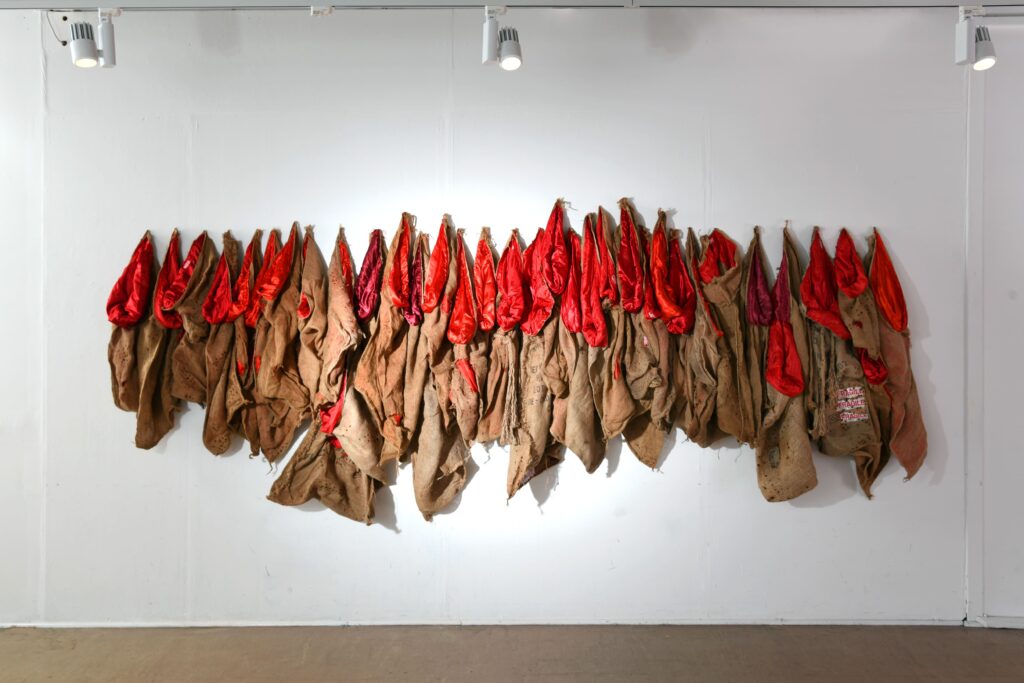
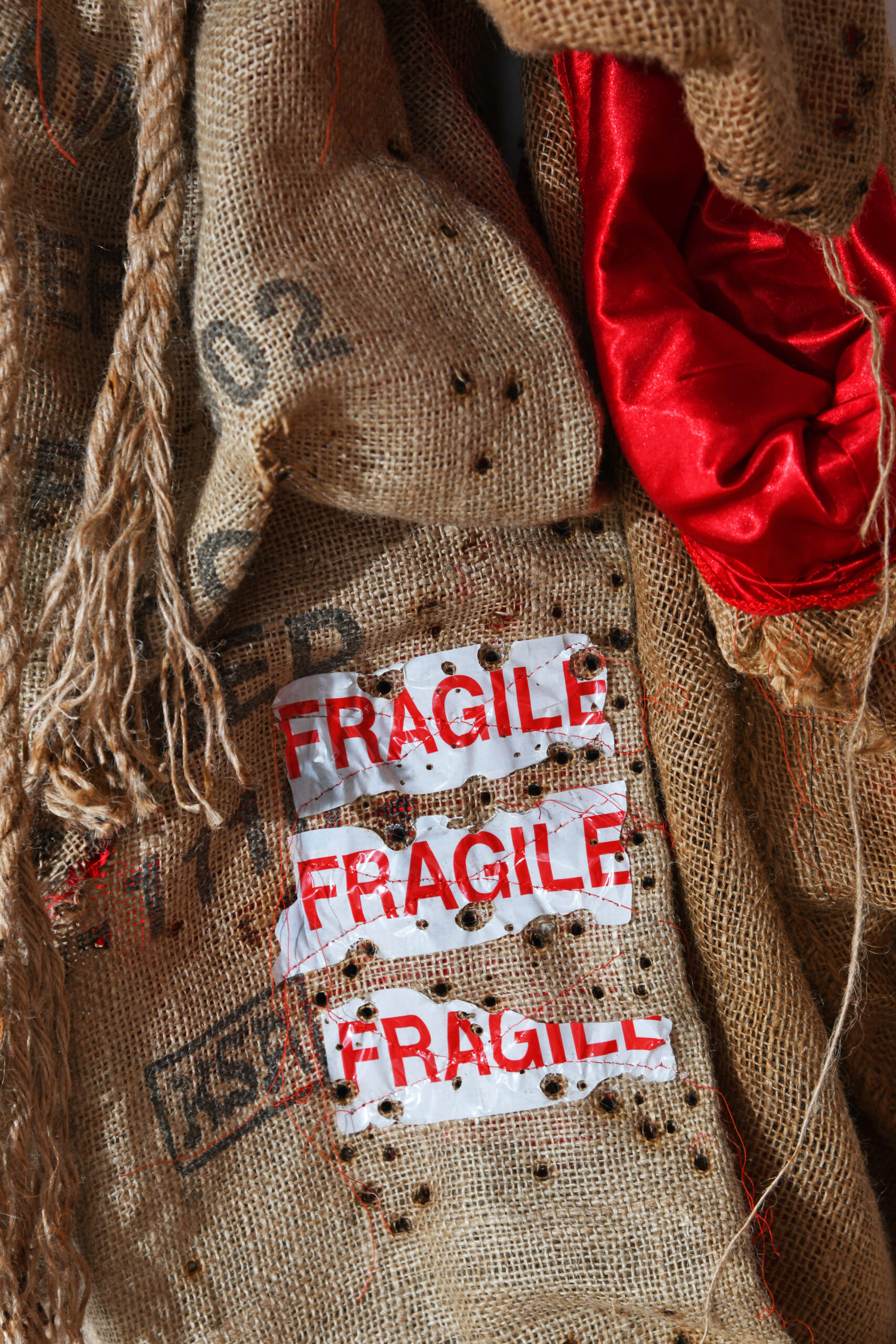
Constructed from hessian sacks, red satin, rope, and surfaces marked by bullet perforations, the installation takes its title from a sobering statistic: 124 active conflicts were documented globally in 2024. By 2026, that number has continued to rise, reflecting an increasingly volatile geopolitical landscape.
While inspired by this data, the work moves beyond statistics to explore the profound human consequences of conflict. Through its carefully chosen materials and spatial arrangement, The One Hundred and Twenty-Four examines the scale, persistence, and impact of contemporary violence while drawing attention to the experiences of individuals and communities affected by it.
Rather than depicting conflict directly, Last creates a visual language that speaks to its consequences. The installation encourages viewers to think about the realities that exist behind headlines and numbers, focusing on the human stories often hidden within global events.
Fragility and Strength
Throughout The One Hundred and Twenty-Four, Last creates a compelling balance between vulnerability and resilience. The hessian sacks evoke ideas of migration, survival, labour, and necessity. Their rough textures suggest hardship while also symbolising endurance and adaptability.
In contrast, the red satin introduces a softer and more delicate visual element. Its rich colour carries associations with life, memory, sacrifice, and human presence. Together, these materials create a dialogue between strength and fragility, highlighting the emotional complexities of conflict and survival.
The bullet perforations embedded within the surfaces serve as traces of violence and disruption. Yet these marks also become part of the artwork’s visual structure, transforming damage into testimony. Rope binds the various elements together, reinforcing themes of connection, dependence, and collective experience.
Addressing Humanitarian Crisis and Displacement
A central concern within The One Hundred and Twenty-Four is the far-reaching impact of sustained conflict. The work reflects on humanitarian crises, forced migration, poverty, displacement, and generational trauma. These consequences often continue long after active violence has ended, shaping the lives of individuals and communities for decades.
Last also considers the effect of conflict on cultural identity. Prolonged instability can threaten traditions, languages, and collective histories, leading to the gradual erosion of cultural memory. Through the installation’s layered forms and interconnected structures, she draws attention to these less visible but deeply significant losses.
The work encourages audiences to reflect on how conflict extends beyond borders and affects societies on a global scale. In doing so, it highlights the shared responsibility of understanding and responding to humanitarian challenges.
Individual Stories Within a Collective Reality
The installation is composed of both individual and grouped forms, creating a visual relationship between personal experiences and collective circumstances. Each element can be interpreted as representing a unique life, carrying its own history, identity, and story.
At the same time, the clustering of forms suggests communities, populations, and shared experiences. This interplay between the individual and the collective reflects the reality of conflict itself: while statistics describe large-scale events, those events are ultimately lived by individuals.
By bringing these elements together within a shared environment, Last emphasises the interconnectedness of human experience. The work serves as a reminder that behind every number exists a person, a family, and a community affected by circumstances beyond their control.
Art as Witness and Hope
Although The One Hundred and Twenty-Four confronts difficult and often painful realities, it is not solely a work about loss. At its heart lies a belief in empathy, compassion, and the possibility of connection.
The installation functions both as a witness to contemporary conflict and as a proposition for greater understanding. It acknowledges suffering while also affirming the resilience of individuals and communities facing adversity.
This balance between awareness and hope characterises Bea Last’s wider artistic practice. Through immersive installations and thoughtful material choices, she creates spaces where audiences can engage with complex issues while reflecting on shared humanity. Her work demonstrates the power of contemporary art to foster dialogue, encourage empathy, and create meaningful connections between personal experience and global realities.
As The One Hundred and Twenty-Four continues to develop, it stands as a powerful example of Last’s commitment to using art as a catalyst for reflection and understanding. In an increasingly fragmented world, her work reminds us of the enduring importance of compassion, connection, and collective responsibility.
