


Michael Aldag is a fine artist whose work is deeply rooted in the landscapes, architecture, and cultural history of Southern Illinois. Born and raised in the region, he has developed an artistic practice that transforms familiar places into thoughtful reflections on memory, identity, and the passage of time. Whether working with painting, photography, drawing, collage, or mixed media, Aldag consistently explores the relationship between people and the spaces they inhabit. His art reflects not only where he comes from but also how he sees the world around him through moments of quiet observation, subtle emotion, and thoughtful storytelling.
For Aldag, art is far more than a creative pursuit. It is both a means of self-expression and self-reflection. While his subjects and materials continue to evolve, one characteristic remains present throughout his body of work: a sense of sobriety. His compositions often embrace stillness rather than spectacle, encouraging viewers to slow down and consider the deeper narratives hidden within familiar places and everyday objects. This contemplative approach has become a defining feature of his artistic voice.
Inspired by the Landscapes of Southern Illinois
Growing up in Southern Illinois has had a lasting influence on Aldag’s work. The region’s rural landscapes, aging buildings, and quiet roads provide a constant source of inspiration. Rather than depicting idealized scenery, he portrays the Midwest as he experiences it honest, reflective, and filled with subtle beauty.
His work captures places that many people might overlook, revealing the emotional character that exists within ordinary environments. Empty streets, weathered structures, and expansive fields become visual records of memory and time. Through careful observation, Aldag invites viewers to appreciate the significance of locations that often pass unnoticed in daily life.
In recent years, his artistic attention has increasingly turned toward photographing former church buildings throughout his region. These structures fascinate him because they embody stories of transformation. Originally built as places of worship, many have been repurposed for entirely different uses, reflecting the changing needs and values of their communities. By documenting these buildings, Aldag preserves more than architecture; he preserves pieces of cultural history.
Art as a Process of Reflection
Aldag believes that creating art is an opportunity to better understand both himself and the world around him. Every project begins with observation but develops into something more personal through experimentation and thoughtful interpretation.
His willingness to work across multiple media reflects this philosophy. Instead of limiting himself to a single discipline, he embraces whichever materials best communicate the ideas behind each project. Paint, photography, collage, drawing, and mixed media all serve as tools for exploring themes of memory, identity, history, and transformation.
This freedom allows every body of work to develop naturally without being constrained by traditional artistic categories. Rather than identifying solely as a painter or photographer, Aldag considers himself a fine artist whose creative process is guided by concept rather than medium.
Exploring Transformation in Convert (Temple A.D. 1898)
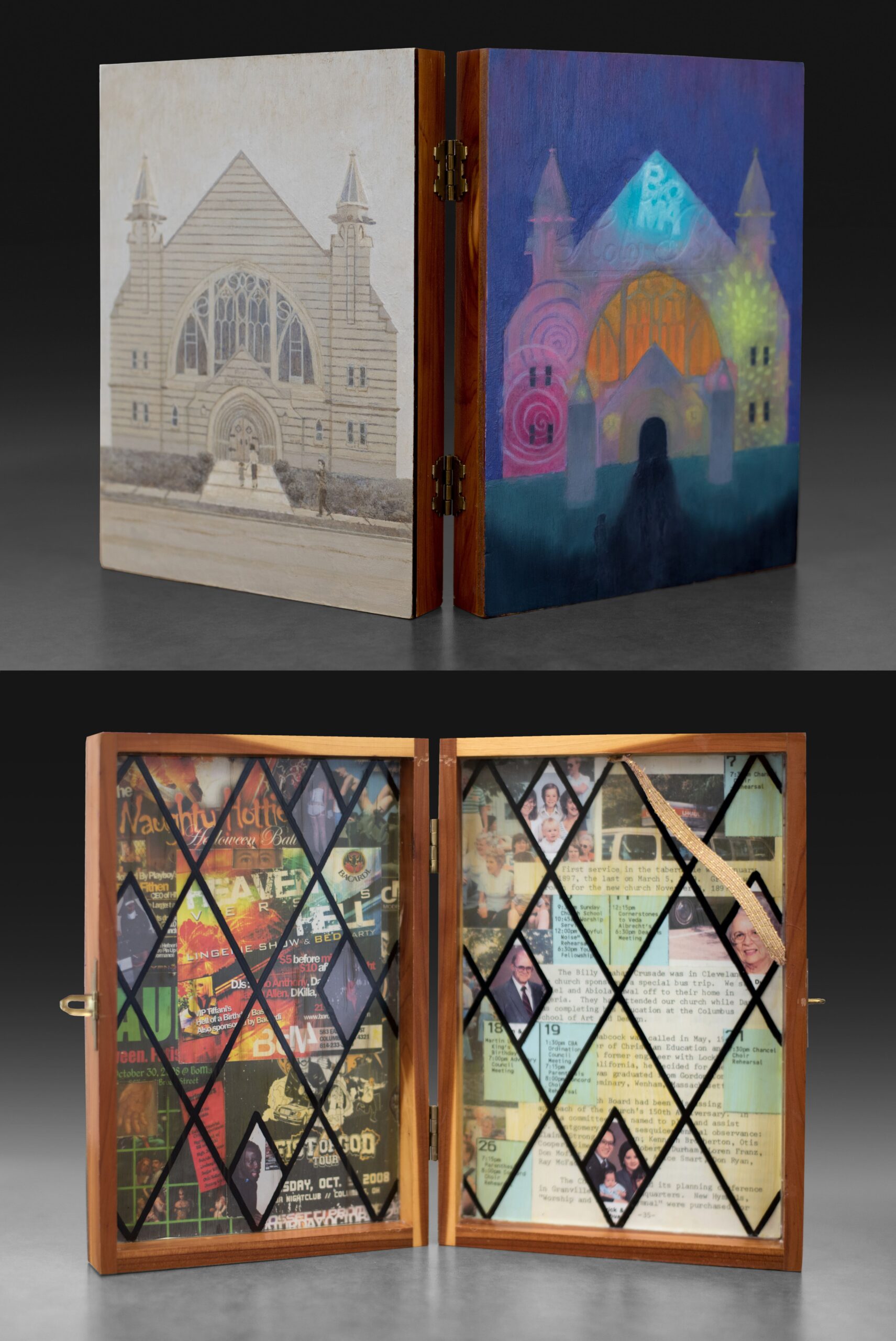
One of Michael Aldag’s most thought-provoking works is Convert (Temple A.D. 1898), completed in 2009. This mixed media artwork demonstrates his ability to combine symbolism, personal observation, and historical narrative within a single piece.
The inspiration came during his years as a student at the Columbus College of Art & Design (CCAD). While walking each day between his apartment and campus, Aldag regularly passed a large church building that had originally been constructed in 1898 as the home of the First Baptist Church in Columbus, Ohio. After serving its congregation for more than a century, financial circumstances forced the church to relocate. The building later found new life as the Bar of Modern Art (BoMA), a nightclub downtown.
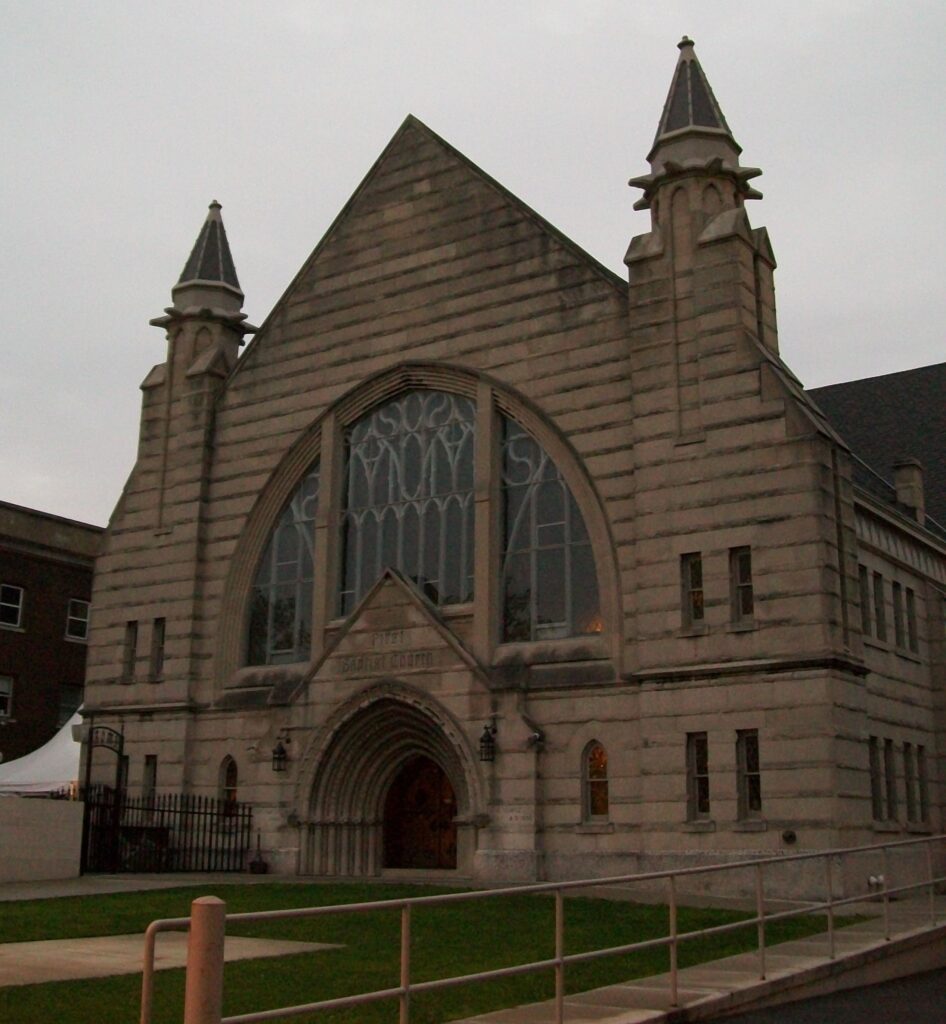
This dramatic change in purpose became the conceptual foundation of Convert (Temple A.D. 1898).
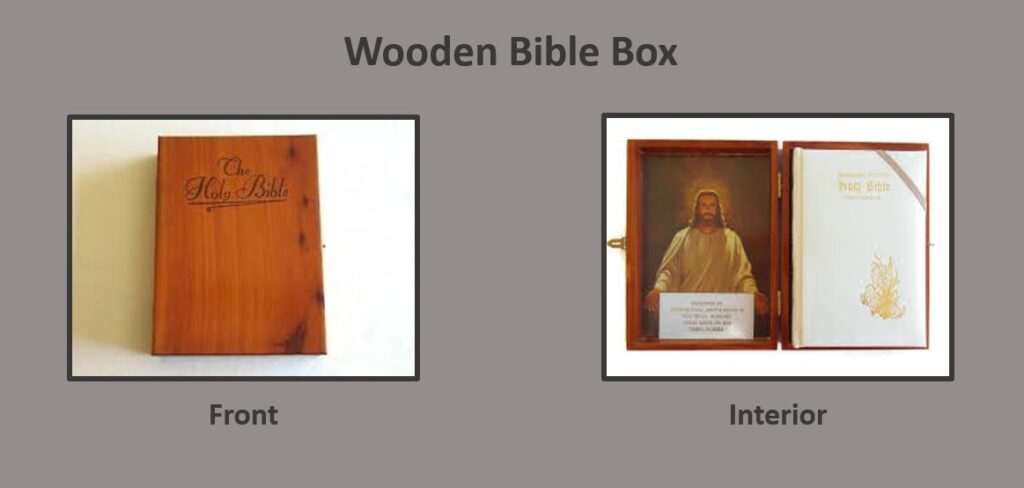
Rather than using a traditional canvas, Aldag selected a wooden Bible box as the artwork’s primary object. The choice was deeply symbolic. Originally designed to protect and carry the Word of God, the box itself underwent a transformation by becoming an artwork, mirroring the changing identity of the building it represented.
The exterior of the box features painted images of the same building at two different moments in its history. One side portrays it as a church, while the other depicts it as BoMA. Although the architecture remains visually consistent, its purpose has fundamentally changed, encouraging viewers to think about how meaning can shift while physical structures remain the same.
A Dialogue Between the Sacred and the Secular
The interior of Convert (Temple A.D. 1898) expands upon this idea through carefully assembled collages. Aldag incorporated promotional cards from BoMA, photographs from a Halloween costume party hosted inside the venue, pages from an old First Baptist Church pictorial directory, and church calendar clippings.
These contrasting materials exist side by side beneath a layer of patterned glass that resembles the decorative windows commonly found in church architecture. The layering creates both physical and conceptual depth, allowing viewers to examine the building’s past and present simultaneously.
Aldag also chose to present the work as a diptych, a format historically associated with Christian altarpieces and devotional imagery. This decision reinforces the artwork’s exploration of spiritual transformation while acknowledging the building’s original purpose.
Perhaps the most compelling aspect of the piece is the question it raises. When a sacred space is transformed into something entirely different, what remains sacred? The work does not attempt to answer this question but instead encourages reflection on changing cultural values and the evolving significance of the spaces people inhabit.
Embracing Experimentation Across Media
One of the most important lessons Aldag carried with him from college was the idea that there are no fixed rules in art. This philosophy continues to shape his practice today.
Instead of limiting himself to one medium, he enjoys experimenting with different materials and techniques. Each project determines its own visual language, allowing the concept to guide the creative process rather than predetermined expectations.
This versatility has become one of Aldag’s greatest strengths. Whether constructing layered mixed media pieces, creating paintings, capturing photographs, or developing collages, he approaches every artwork with curiosity and openness.
His multidisciplinary practice reflects the belief that artistic expression should remain flexible, allowing new ideas and discoveries to emerge naturally throughout the creative journey.
Documenting History Through Architecture
Aldag’s ongoing photographic exploration of former church buildings continues to demonstrate his fascination with architecture as a vessel of memory. These buildings serve as visual reminders that communities evolve, traditions change, and spaces often acquire new meanings over time.
Rather than focusing solely on architectural details, his photographs emphasize atmosphere and emotional presence. They encourage viewers to consider the lives that once filled these spaces and the stories that continue to linger within their walls.
By documenting these locations, Aldag contributes to preserving local history while also opening broader conversations about identity, faith, community, and cultural transformation.
Recognition and Continued Artistic Growth
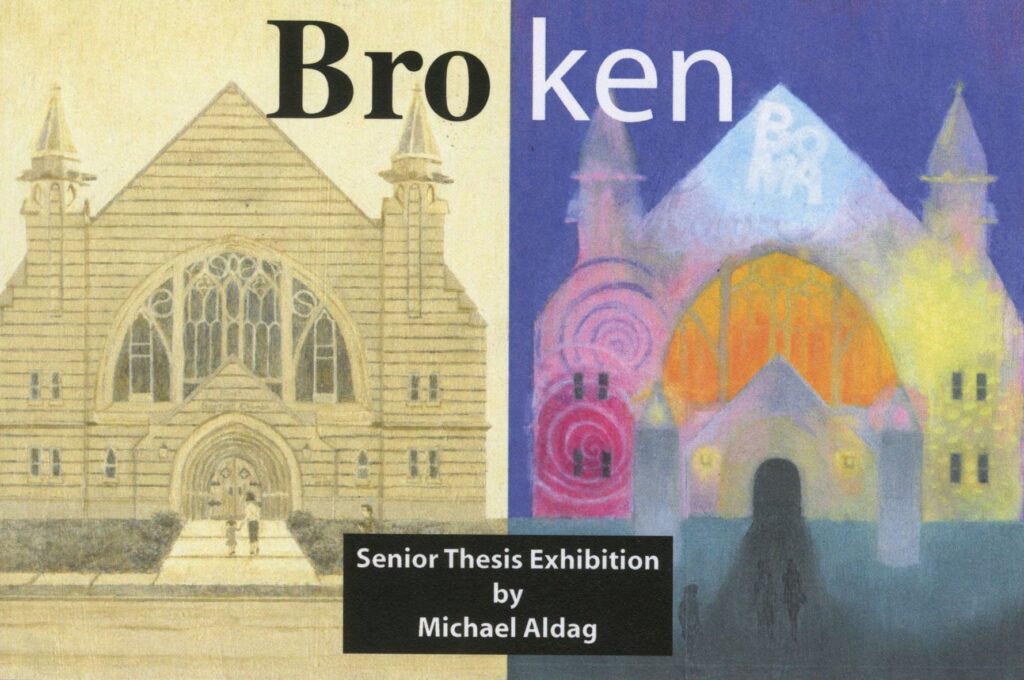
Aldag’s thoughtful approach to art has earned recognition throughout his career. Convert (Temple A.D. 1898) was featured in his Bachelor of Fine Arts Senior Thesis Exhibition at the Columbus College of Art & Design before being selected for the 65th Annual Ohio Exhibition at the Zanesville Art Center.
After graduating, he returned to Illinois and continued developing his artistic practice while embracing new forms of creative experimentation.
His work has received several exhibition honors, including First Place for a mixed media artwork in the 2014 Fall Art & Photography Competition & Exhibit in Centralia, Third Place for a painting in the 2015 Little Egypt Arts Association Painting & Drawing Competition in Marion, and Second Place for photography in the 2021 Illinois Art League Membership Show in East Peoria.
These achievements reflect not only his technical ability but also his versatility across multiple artistic disciplines.
Continuing to Find Meaning in Everyday Places
Michael Aldag’s work demonstrates that meaningful art often begins with careful observation of the world closest to us. Through landscapes, architecture, photography, painting, and mixed media, he transforms familiar places into thoughtful explorations of memory, history, spirituality, and personal reflection.
His ability to move freely between artistic disciplines allows each project to find its own voice while maintaining the quiet, contemplative atmosphere that defines his practice. Whether documenting a former church, assembling symbolic collages, or capturing the understated beauty of the Midwest, Aldag consistently encourages viewers to pause and reconsider the significance of ordinary places.
As his artistic journey continues, Michael Aldag remains committed to exploring the stories embedded within landscapes and architecture. His work serves as a reminder that every building, every road, and every familiar scene carries layers of history waiting to be discovered. Through patience, experimentation, and thoughtful craftsmanship, he continues to preserve those stories, inviting audiences to reflect on the changing relationship between place, memory, and meaning.
