


Michael Aldag is a fine artist based in Southern Illinois, where he was born and raised. His work is deeply rooted in the physical and emotional landscape of his upbringing, drawing inspiration from the rural environments, family histories, and Christian faith that have shaped his worldview. Since beginning his professional exhibition career in 2009, Aldag has developed a body of work that reflects both personal memory and a broader meditation on place, time, and cultural change.
In recent years, his artistic focus has shifted toward documenting and interpreting former church buildings throughout Southern Illinois. In his ongoing series Temple, Aldag has photographed more than seventy abandoned or repurposed church sites across the region. These structures, once central to community life, now stand as quiet witnesses to shifting demographics, changing belief systems, and the passage of time. Through this series, Aldag continues to explore how architecture can hold emotional weight and spiritual resonance even in states of decline or disuse.
Architecture as Emotional Portraiture
A defining characteristic of Michael Aldag’s work is his belief that architecture and landscape can communicate human emotion in much the same way as portraiture. Rather than focusing on people directly, he often turns to buildings and rural environments as symbolic stand-ins for human experience.
In his view, a fenced-in yard can suggest protection or guardedness, much like a stern facial expression or folded arms. Similarly, weathered wood, rusted metal, and empty porches can imply loneliness, memory, or emotional distance. These subtle visual cues become the language through which Aldag constructs narrative and feeling within his work.
This approach places him within a tradition of American Realism, where everyday scenes are elevated into psychological studies. Like the artists who came before him, Aldag uses familiar settings not simply to document them, but to reveal the emotional atmosphere embedded within them.
House on Sweetgum (2010): A Study in Isolation and Memory
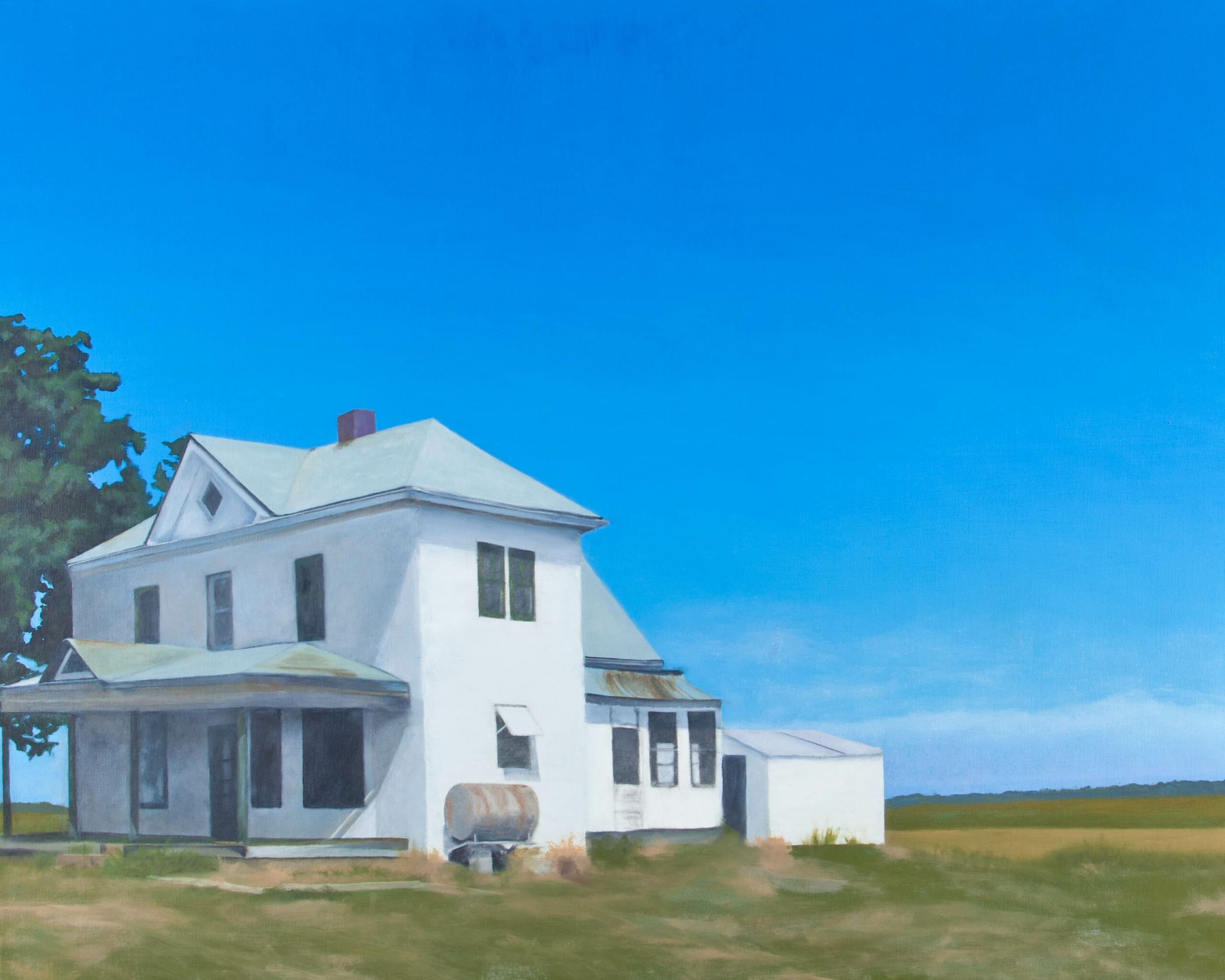
One of Michael Aldag’s most significant early works is House on Sweetgum (2010). The painting captures a weathered rural structure that appears abandoned yet still emotionally present. Through its worn surfaces and quiet composition, the work evokes a strong sense of solitude and reflection.
The painting was awarded Best of Show in the 2010 Illinois Art League Show, and when it was reviewed by the judge, Scott Cavanah of Bradley University, it drew particular attention. The judge described the work in a single, powerful word: “lonely.” This response reflects the central emotional tone of the piece, which resonates with viewers even without narrative explanation.
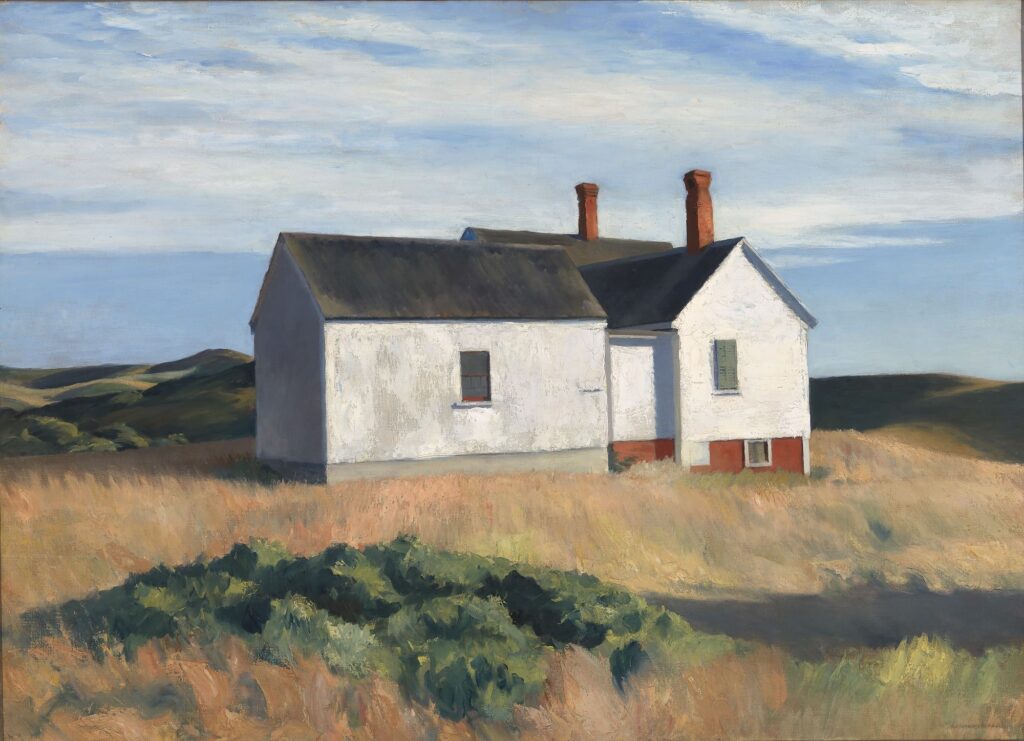
Critics and audiences have also compared Aldag’s work to that of American Realist painter Edward Hopper. Like Hopper, Aldag is interested in the psychological dimension of space. Hopper’s paintings often depict isolated figures or empty environments that convey emotional distance. In a similar way, House on Sweetgum transforms a rural house into a quiet reflection on absence and memory.
Personal Memory and the Rural Home
The emotional depth of House on Sweetgum is rooted not only in visual observation but also in personal history. For Aldag, the scene is closely tied to his own family experience. The house depicted in the painting recalls his grandparents’ farmhouse in rural Centralia, Illinois, where his father was raised.
As a child, Aldag visited this farmhouse regularly. He remembers simple but vivid moments: playing with old toys, seeing his grandmother smile, and eating Nilla Wafers in the kitchen. These memories are not grand or dramatic, but they carry a lasting emotional weight that later found expression in his art.
After his grandparents passed away, the responsibility of maintaining the property fell to his family. His father continued to check on the land, and Aldag himself spent time mowing the lawn. These acts of care maintained a connection to a place that was slowly fading from daily life but remained deeply significant in memory.
Eventually, due to changing circumstances, his father made the difficult decision to have the house demolished. The land was returned to agricultural use, now producing crops such as wheat, corn, and soybeans. The physical structure was gone, but its emotional presence remained.
Transformation of Place and Continuing Memory
Even after the demolition of the farmhouse, its memory continued to resurface in unexpected ways. A photograph of the original property from 1974, found through the Vintage Aerial archive, reintroduced the site as it once existed. This image provided a historical layer to the family’s memory, connecting past and present through visual documentation.
Today, the land has fully transformed into farmland, yet for Aldag, it continues to exist in both memory and imagination. This tension between disappearance and remembrance is central to his artistic practice. His work suggests that places do not simply vanish when structures are removed; instead, they persist in emotional and psychological forms.
Exhibitions and Artistic Recognition
House on Sweetgum has received notable recognition within the Illinois art community. After winning Best of Show at the 2010 Illinois Art League Show, the painting was later juried into the Southern Illinois Artists Open Competition Exhibition in 2011. These early successes helped establish Aldag’s presence as a significant regional artist.
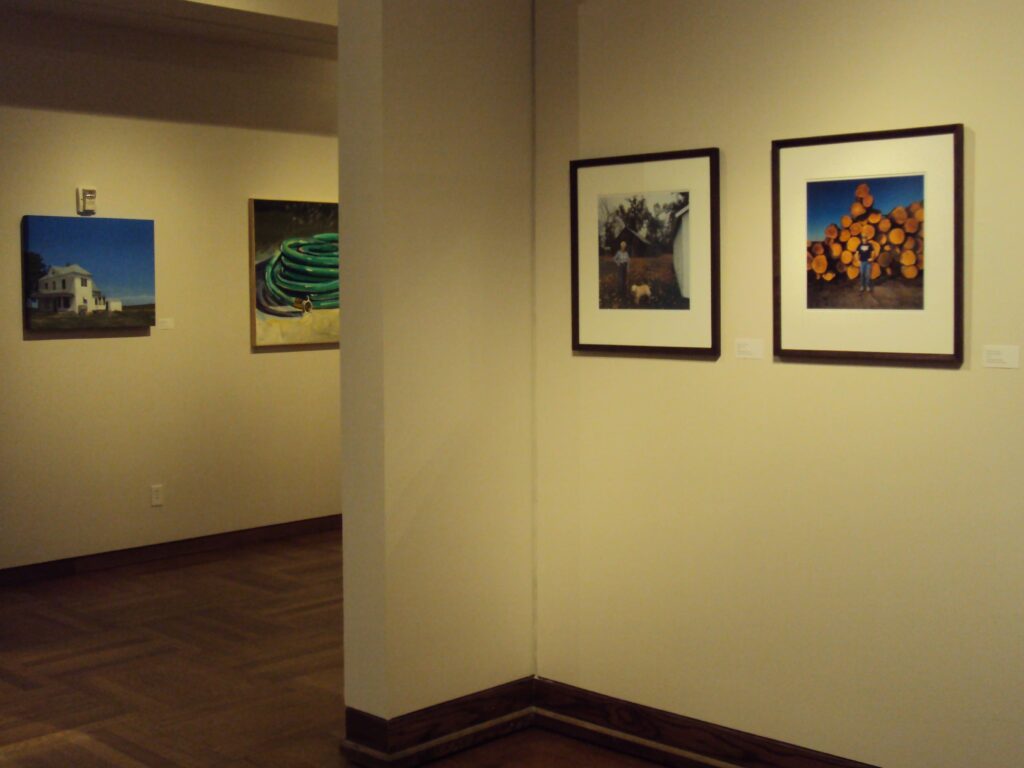
The work was also included in the 2022 exhibition Community Faces & Places: The Art of Michael Aldag and Sam Howard, held at the Mitchell Museum at Cedarhurst Center for the Arts in Mt. Vernon, Illinois. This exhibition highlighted Aldag’s ongoing exploration of regional identity, memory, and architectural heritage, situating his work within a broader conversation about community and place in Southern Illinois.
Conclusion: The Quiet Persistence of Place
Michael Aldag’s work invites viewers to reconsider how they understand familiar environments. Through his sensitive depictions of rural architecture and abandoned structures, he reveals the emotional layers embedded in everyday spaces. His paintings and photographic studies do not simply document buildings; they preserve the feelings, memories, and histories attached to them.
In House on Sweetgum and his broader body of work, Aldag transforms rural Illinois into a landscape of memory and meaning. His art reminds us that even when buildings disappear, the experiences tied to them continue to live on in memory, in family stories, and in the quiet language of art.
