


Art has the remarkable ability to preserve memory, challenge perception, and transform personal experiences into universal stories. For Huang Yi Min, painting has become a lifelong conversation between history and identity. Born in Shanghai, China, in 1950, Huang’s artistic journey has been deeply influenced by both cultural tradition and the dramatic social changes she witnessed throughout her life.
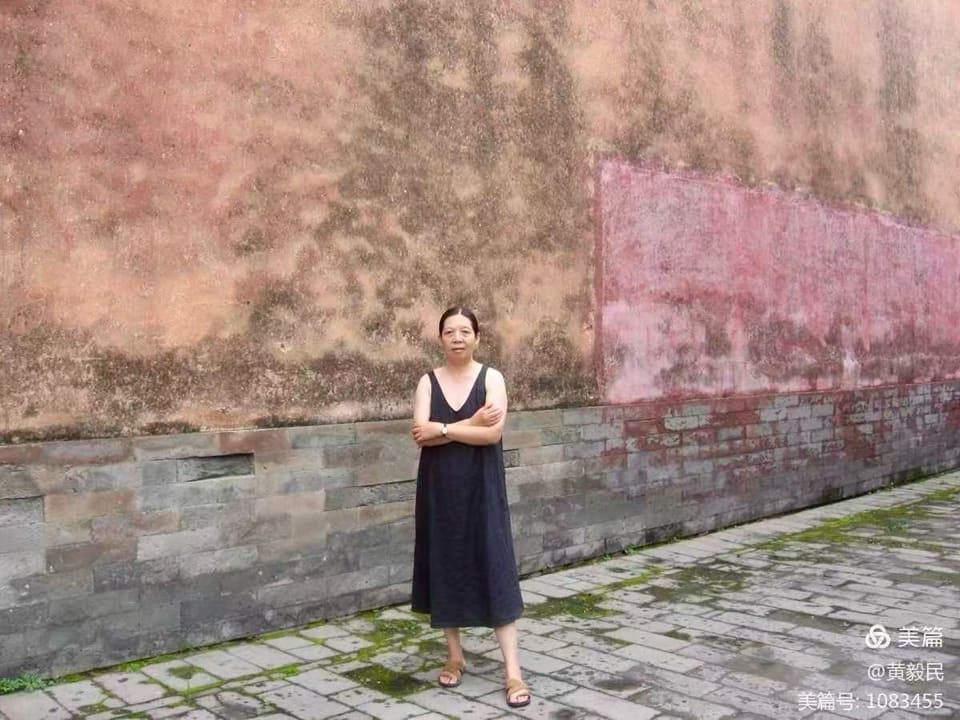
A graduate of the Fine Arts Department of Beijing Normal University, Huang immigrated to the United States in 1997 as an individual recognized for outstanding talent. Her career spans decades of artistic exploration, blending classical Chinese influences with contemporary surrealist expression. Through her paintings, she bridges the past and present, creating works that invite viewers to reflect on memory, resilience, and the enduring relationship between people and place.
Finding Creativity During Challenging Times
Huang’s path as an artist was far from conventional. At just sixteen years old, her education was interrupted by the Cultural Revolution, a decade that profoundly reshaped Chinese society and disrupted countless lives. During this period, many traditional cultural practices were rejected, and opportunities for artistic education became limited.
Despite these circumstances, Huang never abandoned her passion for art. While working as a farmer in the fields, she continued to draw, observe nature, and study traditional culture whenever possible. These years cultivated not only technical discipline but also an appreciation for perseverance and lifelong learning.
Rather than allowing adversity to define her future, Huang transformed those experiences into a deeper understanding of human emotion and cultural identity. This resilience remains one of the defining characteristics of her artistic voice today.
Developing a Distinctive Artistic Vision
After completing her university education, Huang began working as an art editor at China Children’s Publishing House, where she produced countless character sketches and landscape paintings. This extensive practice strengthened both her technical precision and creative confidence.
Over time, her work evolved beyond traditional representation. Huang gradually developed a surrealist style rooted in classical Chinese aesthetics while embracing imaginative compositions that blur the boundaries between reality and memory.
For nearly two decades, one recurring setting has remained central to her artistic practice: the intersection between the historic Forbidden City in Beijing and the ordinary residential neighborhoods that surround it. This visual dialogue between imperial grandeur and everyday life creates a powerful metaphor for the coexistence of history, modernity, and personal experience.
Rather than depicting architecture as simple landmarks, Huang transforms these spaces into emotional landscapes where memory, imagination, and lived experience merge into one visual language.
International Recognition and Lasting Impact
Huang’s dedication to originality has earned recognition both in China and internationally. Her work has received attention from The New York Times, highlighting the distinctive qualities of her artistic vision and her ability to reinterpret cultural history through contemporary painting.
She was also honored with the prestigious Anna Walinska Academic Achievement Award in the United States, recognizing her significant artistic accomplishments and continued contribution to the visual arts.
Her paintings have become part of numerous respected public and private collections, including those associated with the Singapore Museum of Art, Hong Kong Museum of Art, Singapore Simin Art Gallery, the New York Crystal Art Foundation, the New York Chinese Gallery, the Director of the Newark Museum of Art, and various distinguished private collectors.
These collections reflect the universal appeal of Huang’s work, demonstrating how deeply personal stories can resonate across cultures and generations.
The Forbidden City of Freedom
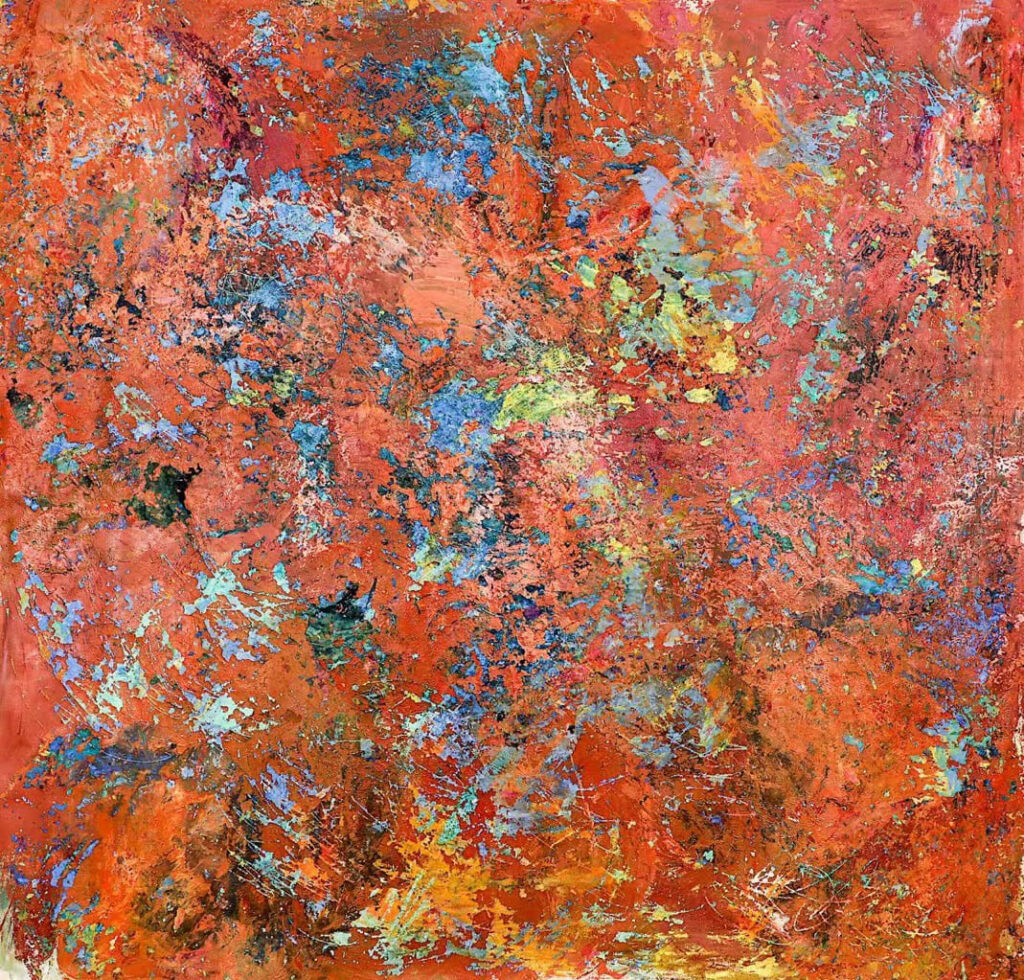
Among Huang Yi Min’s most meaningful creative explorations is The Forbidden City of Freedom, a body of work inspired by one of the most significant places in her life.
The Forbidden City has accompanied Huang through every stage of her personal journey from childhood to adulthood. More than a historical monument, it represents a spiritual home filled with memories, emotions, and reflection. Its centuries-old vermilion walls have become silent witnesses to both China’s history and her own life story.
Rather than portraying the palace through realistic architectural detail, Huang sought to capture the emotional relationship she feels with this iconic place. She wanted viewers to experience the intimacy, familiarity, and quiet power she encounters whenever she stands before its ancient walls.
Innovation Through Material and Technique
To express the profound emotional weight of this subject, Huang challenged herself technically as well as conceptually.
She chose to work on a monumental canvas measuring approximately four meters wide by three meters high, allowing the physical scale of the painting to echo the overwhelming presence of the Forbidden City itself.
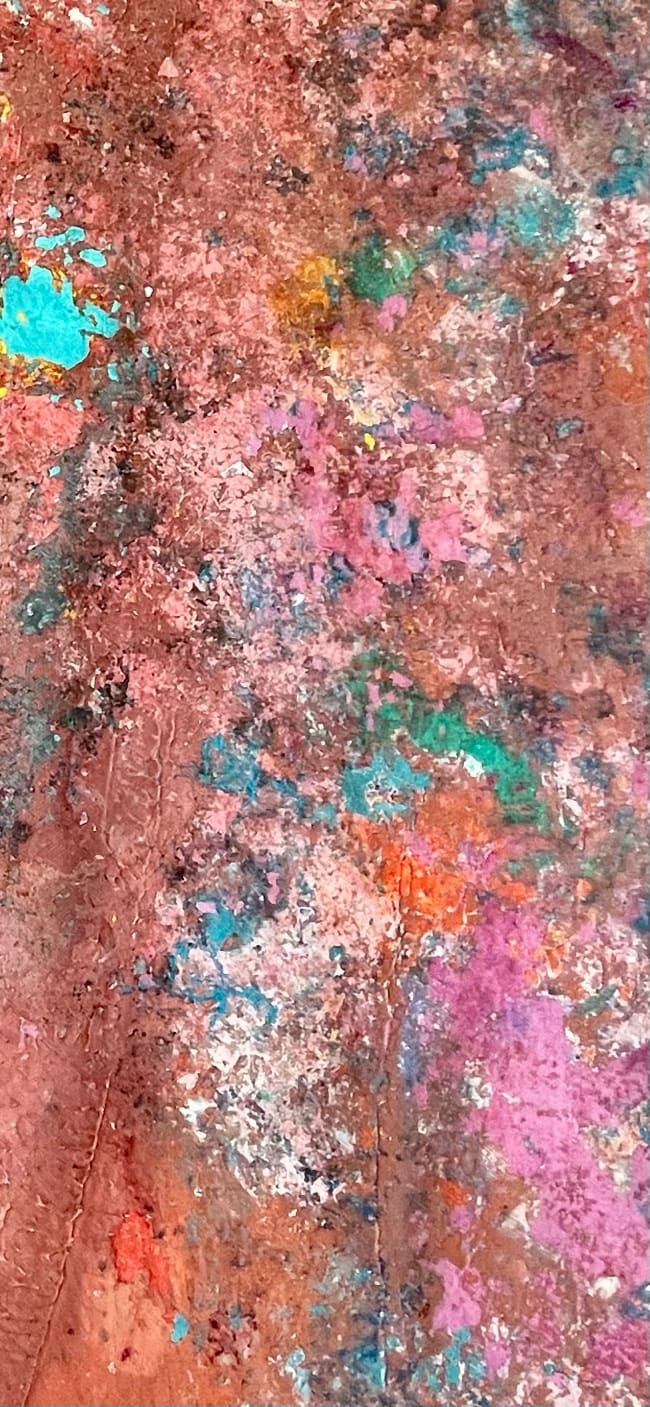
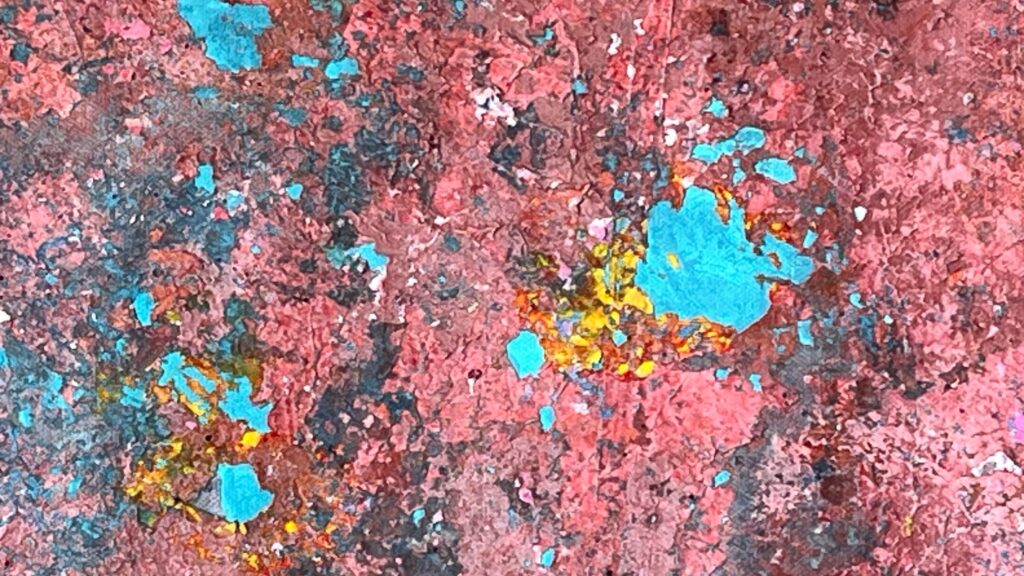
The creative process became an experiment in material transformation. Huang first applied traditional mineral pigments to the canvas before covering them with layers of acrylic paint. Before the acrylic had fully dried, she carefully peeled away portions of the surface, revealing the colors beneath and creating richly textured layers that resemble weathered palace walls.
This innovative process was not borrowed from existing artistic methods. Instead, it emerged directly from Huang’s careful observation of the walls themselves, whose surfaces have accumulated centuries of weather, restoration, and history.
The technique demanded extraordinary patience. Many attempts failed, leaving the studio resembling an active construction site as layers of paint were repeatedly applied, removed, and rebuilt. Throughout the process, Huang herself became covered in pigment, physically participating in the transformation of the work.
The final result embodies the passage of time itself. Every textured surface reflects history, endurance, and the beauty found within imperfection.
A Painting That Feels Like Home
When the completed work was finally installed in her home, Huang experienced something far more meaningful than professional satisfaction.
The painting brought her an overwhelming sense of familiarity a feeling that the emotional atmosphere of the Forbidden City had been successfully translated onto canvas. It became more than an artwork; it became an extension of memory, carrying with it the colors, textures, and spirit that had accompanied her throughout her life.
This emotional authenticity is what gives The Forbidden City of Freedom its lasting power. It is not simply about architecture or history, but about belonging, remembrance, and the invisible connections people carry with places that shape who they become.
Preserving History Through Contemporary Art
Huang Yi Min’s artistic practice demonstrates how personal memory can become a universal language. By combining traditional cultural influences with innovative techniques and surrealist imagination, she creates paintings that encourage viewers to reconsider history not as something distant, but as something living within everyday experience.
Her work reminds us that places hold stories beyond their physical structures, and that art possesses the unique ability to preserve emotions that words alone cannot express. Through every textured surface, layered color, and carefully constructed composition, Huang continues to build bridges between heritage and innovation, inviting audiences around the world to experience history through both the eye and the heart.
