


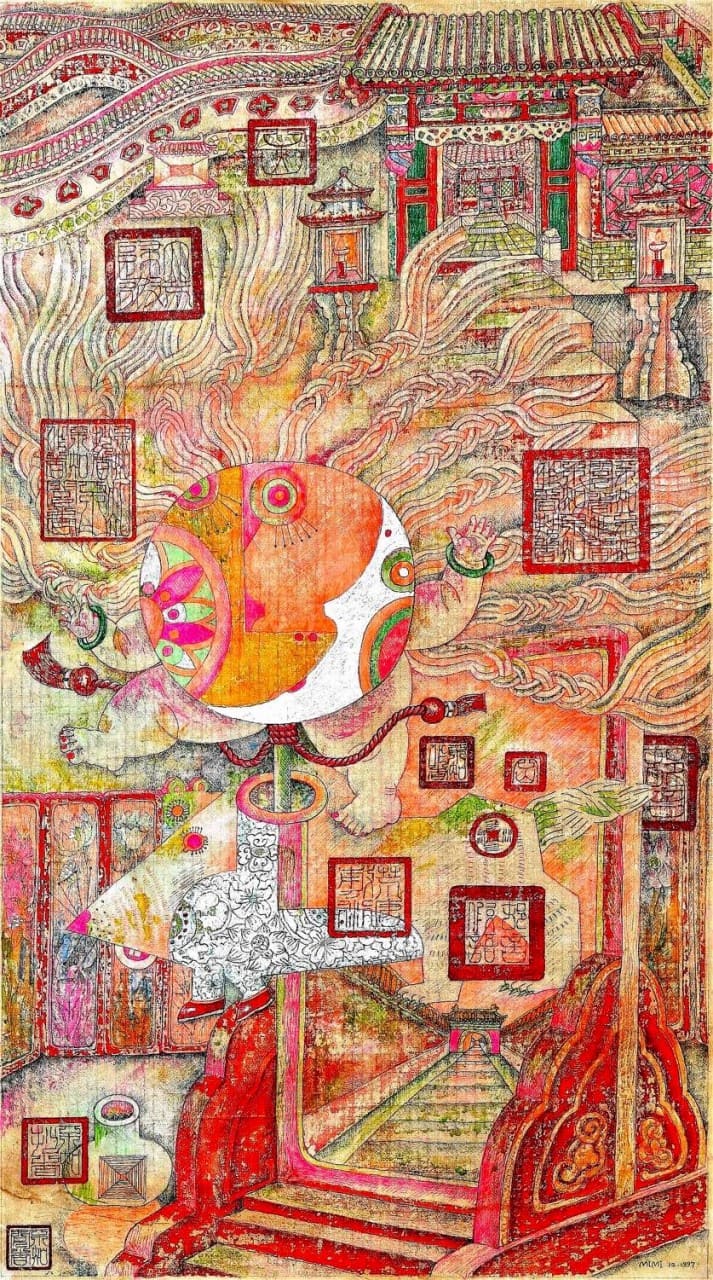
Huang Yi Min, born in Shanghai in 1950, is an artist whose life and work are deeply intertwined with the turbulent transformations of modern Chinese history. Her early years coincided with a period of profound cultural and political upheaval, most notably the Cultural Revolution, which began when she was just sixteen. This decade long movement disrupted not only her formal education but also the continuity of traditional Chinese cultural practices, many of which were rejected or suppressed during that time.
Yet, even in the face of such adversity, Huang’s connection to art never faded. While working as a farmer in the fields, she continued to practice drawing and immerse herself in the rhythms of nature and tradition. These formative experiences marked by both hardship and introspection became the foundation of her lifelong artistic philosophy: a commitment to continuous learning, a reverence for cultural heritage, and an enduring curiosity about the human condition.
Academic Formation and Artistic Development
After the Cultural Revolution, Huang resumed her academic journey and graduated from the Fine Arts Department of Beijing Normal University. This period marked a turning point, allowing her to refine her technical skills while reconnecting with artistic traditions that had been previously inaccessible.
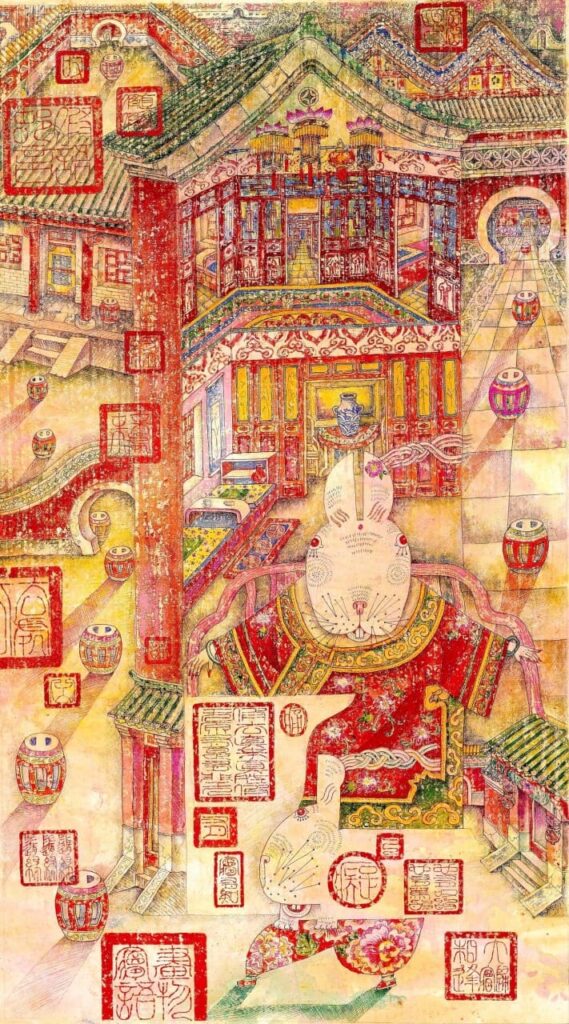
Following her graduation, she worked as an art editor at China Children’s Publishing House. This role provided her with a platform to produce a wide range of illustrations, including character sketches and landscape paintings. Over time, her artistic language evolved into a distinctive style that blends traditional Chinese aesthetics with elements of surrealism. Her works often depict imagined scenes where historical grandeur and everyday life intersect, creating a dreamlike atmosphere that invites both emotional engagement and philosophical reflection.
Migration and International Recognition
In 1997, Huang Yi Min immigrated to the United States as an individual recognized for outstanding talent. This transition not only broadened her audience but also deepened the conceptual scope of her work. Living between cultures, she developed a unique perspective that bridges Eastern traditions and contemporary global narratives.
Her paintings, particularly those exploring the juxtaposition of the Forbidden City’s imperial architecture with ordinary residential spaces, have garnered significant attention. Over nearly two decades, she has continuously explored this thematic intersection, using it as a stage for emotional expression and imaginative storytelling.
Her work has been reviewed by major publications such as The New York Times and has earned her prestigious accolades, including the Anna Walinska Academic Achievement Award in the United States. These recognitions underscore her ability to translate deeply personal and culturally specific experiences into universally resonant visual narratives.
Collections and Institutional Recognition
Huang’s artworks have been widely collected by both institutions and private collectors. Her pieces are held by influential figures and organizations associated with major art institutions, including the Singapore Museum of Art, the Hong Kong Museum of Art, and the Newark Museum of Art. Additionally, her work is part of private collections linked to galleries and foundations in New York and Singapore.
This international presence reflects not only the aesthetic appeal of her work but also its intellectual depth. Collectors are drawn to her ability to weave together history, memory, and imagination into cohesive visual stories that transcend geographical and cultural boundaries.
Dream-Telling of the Red Chamber: A Poetic Vision
Among Huang Yi Min’s most evocative series is Dream-Telling of the Red Chamber, inspired by her deep engagement with the historic Prince Gong Mansion in Beijing’s Shichahai area. This site, rumored by some historians to be the prototype for the Jia Mansion in the classic Chinese novel Dream of the Red Chamber, became a central source of inspiration for her artistic exploration.
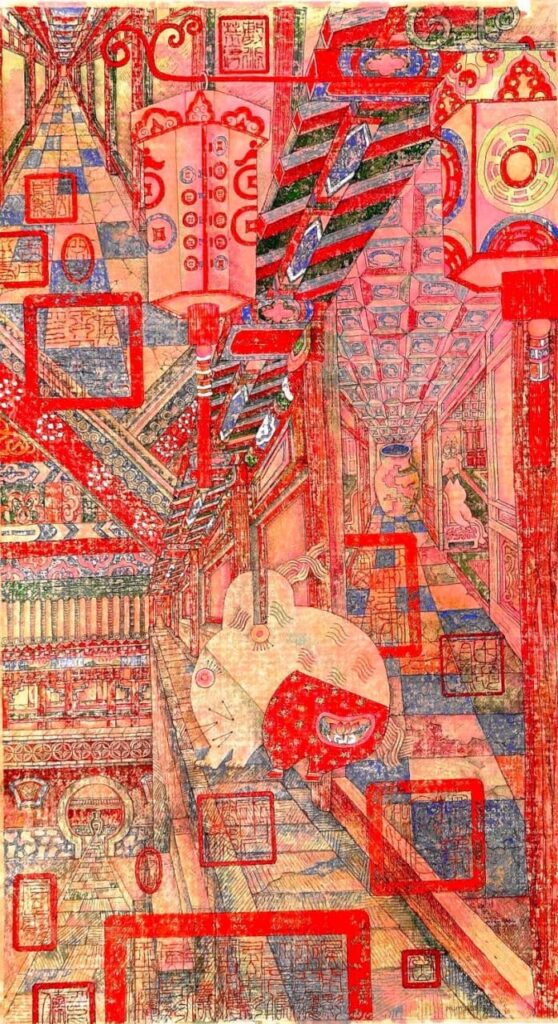
Huang’s experience of the mansion was immersive and almost otherworldly. Walking through its grand yet silent gardens, she felt transported to another era. The absence of people heightened the presence of memory, as if the walls themselves whispered stories of past opulence and decline. Her repeated visits both during the day and at night allowed her to internalize every detail of the space, from its architectural intricacies to its atmospheric subtleties.
Her encounters with local legends further enriched her imagination. Tales of ghostly figures, including the tragic image of Qin shi, and sightings of a mysterious white fox added layers of mysticism to the environment. The Fox Immortal Shrine, with its continuous stream of incense offerings, symbolized the enduring human desire to connect with unseen forces and seek protection in uncertain times.
These experiences culminated in a series of paintings that blur the boundaries between reality and illusion. In her depiction, the Red Chamber appears both vibrant and empty a paradox that captures the transient nature of human existence. The use of soft pink hues creates a sense of distant splendor, while the underlying stillness suggests an inevitable fading of all things.
Philosophical Undertones and Symbolism
Central to the Dream-Telling of the Red Chamber series is a profound philosophical inquiry into concepts such as truth, falsity, and obsession. Huang draws inspiration from the novel’s spiritual themes, as well as from her own introspective reflections.
The recurring voice of a monk in her narrative serves as a symbolic guide, offering enigmatic insights into the nature of existence. Phrases like Falsity goes, truth comes and From nothing comes being echo traditional philosophical ideas while inviting contemporary interpretation. These meditations reveal Huang’s interest in the cyclical and often contradictory nature of life.
The notion of obsession, in particular, becomes a focal point. Huang suggests that human emotions joy, sorrow, longing are deeply intertwined with attachment and illusion. Through her art, she explores how these emotions shape our perception of reality, often blurring the line between what is real and what is imagined.
A Reflection on Modern Existence
Huang Yi Min’s work ultimately extends beyond historical or literary references to address the condition of modern humanity. The image of Baoyu, a central character in Dream of the Red Chamber, serves as a powerful metaphor. His departure into a vast, snow covered landscape symbolizes both liberation and loss a theme that resonates with contemporary experiences of displacement and self discovery.
In this context, Huang’s art can be seen as a meditation on the modern soul. Her paintings invite viewers to reflect on their own journeys, encouraging a deeper awareness of the transient and often illusory nature of life. The interplay between past and present, reality and imagination becomes a space for contemplation and transformation.
Conclusion
Huang Yi Min’s artistic journey is a testament to resilience, creativity, and the enduring power of cultural memory. From her early experiences during the Cultural Revolution to her international recognition as a contemporary artist, she has consistently drawn upon her personal history to create works of profound emotional and philosophical depth.
Through series like Dream-Telling of the Red Chamber, she not only reimagines historical spaces and literary narratives but also offers a lens through which to examine the complexities of modern existence. Her art stands as a bridge between worlds past and present, East and West, reality and dream inviting viewers to step into a realm where imagination and truth coexist in delicate balance.
