


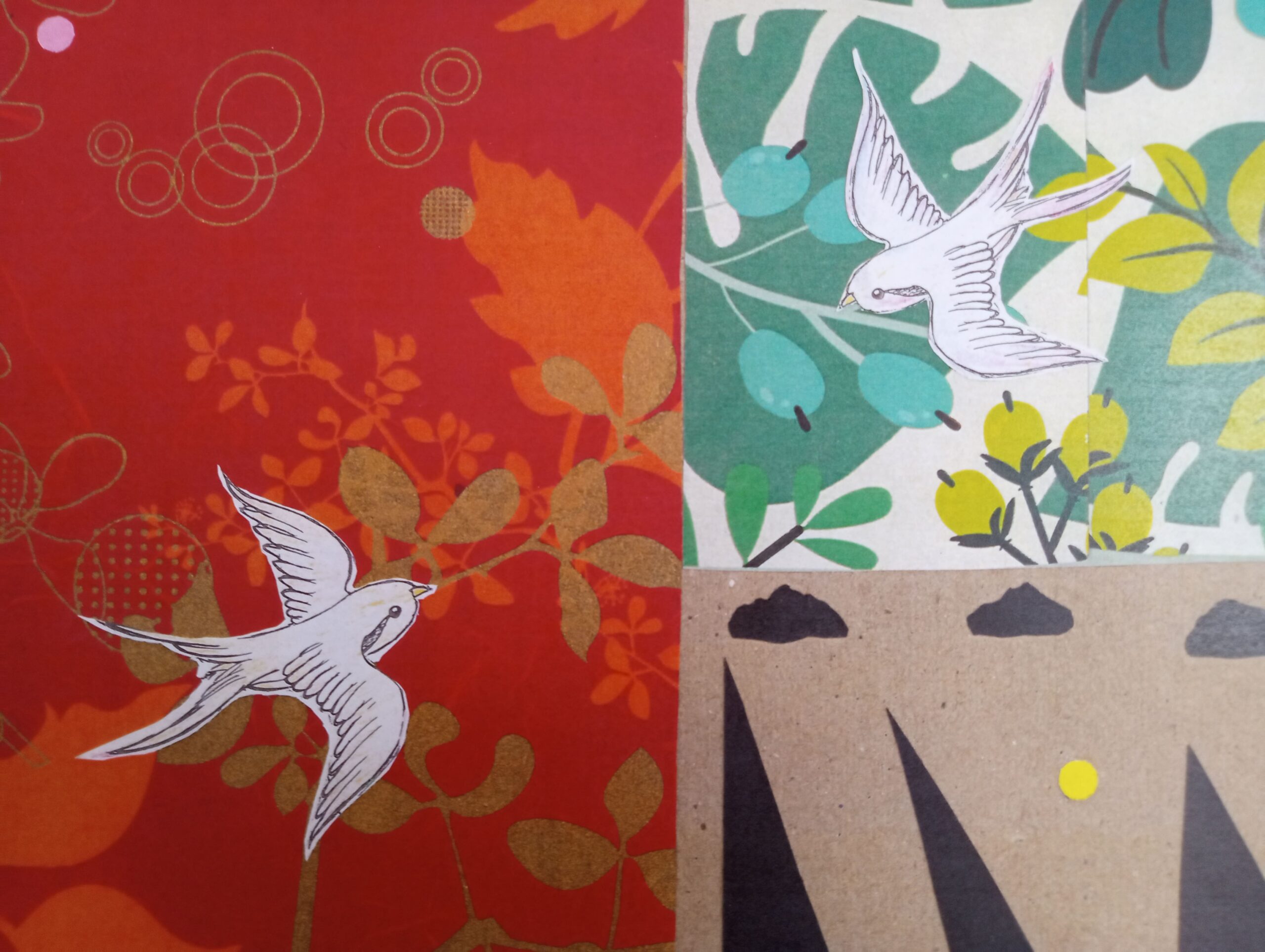
Contemporary artist Jesse A. Kantu has built a multidisciplinary practice rooted in reflection, humanity, and emotional endurance. Working across sculpture, painting, writing, and mixed media, Kantu’s artistic journey reveals a consistent desire to examine the shared experiences that connect people across cultures. His work often explores themes of vulnerability, healing, spiritual movement, and the perseverance required to navigate modern life. Through intimate materials and thoughtful compositions, the artist transforms personal and universal struggles into visual meditations on resilience.
Kantu studied at the University of Houston, where he earned a BFA in Sculpture with a Minor in Art History in 2006. His academic background provided a strong foundation in both technical process and historical context, allowing him to approach art through conceptual depth as well as material experimentation. Later, in 2015, he completed his MFA in Painting from Houston Baptist University, expanding his practice further into narrative and symbolic image-making.
Throughout his career, Kantu has remained deeply invested not only in his own artistic development but also in supporting creative communities. In 2011, he founded Pyramid Art Services, a social arts hub dedicated to helping others discover and strengthen their artistic voice. This commitment to collaboration and mentorship reflects the same human-centered philosophy present in his artwork. His creative practice is not isolated from society; instead, it seeks to create dialogue, encouragement, and emotional connection.
In 2020, Kantu expanded into literary work with the publication of EMERGING – New Contemporary Narratives in the 21st Century. The book further demonstrated his interest in storytelling and contemporary human experience, reinforcing the interdisciplinary nature of his creative vision. Whether through visual composition or written language, Kantu consistently investigates the fragile yet enduring condition of humanity.
Exploring Shared Human Experience
At the center of Kantu’s work lies an exploration of what he describes as the brokenness of Man’s plight found in all cultures. Rather than focusing on division, his work examines common denominators — the emotional and psychological realities that unite people regardless of background. Themes such as pain, perseverance, memory, recovery, and hope emerge repeatedly throughout his practice.
His works often feel contemplative rather than confrontational. There is a quiet honesty in the way he approaches suffering and healing. Instead of dramatizing hardship, Kantu presents it as part of the ongoing rhythm of life. This perspective gives his work a deeply human quality that resonates across audiences.
The artist’s mixed media approach also reinforces these ideas. By combining humble, tactile materials with expressive drawing and layered surfaces, he creates pieces that feel intimate and lived-in. Paper, fabric, pen marks, and color become carriers of emotional memory. The physical construction of the artwork mirrors the emotional reconstruction that many people experience throughout their lives.
Remembering an Old Idea
One example of Kantu’s reflective visual language can be seen in his 2026 work Remembering an Old Idea. Measuring 7 inches by 9 inches, the piece is composed of fabric paper, construction paper, pen, and map pencils. Though modest in scale, the artwork carries a thoughtful emotional presence that invites viewers into a moment of quiet introspection.
The title itself suggests memory, rediscovery, and the return to a truth that may have once been forgotten. Rather than presenting a grand statement, the work feels personal and meditative, as though the viewer is being asked to pause and reconsider their relationship with movement, healing, and self-awareness.
Accompanying the work is a deeply reflective message about resilience and perspective. The artist explains that whether a person is surrounded by chaos or existing in peace, there is always the ability to continue moving forward. Perspective shapes the direction of life, and moments of pain or failure are temporary parts of a larger journey. Healing, recovery, and mindfulness become essential elements of personal growth.
This statement captures the emotional core of the piece. Kantu does not deny the existence of pain or instability. Instead, he acknowledges them while emphasizing the possibility of growth and continuation. The artwork becomes less about avoiding struggle and more about learning how to move through it with awareness and resilience.
Materiality and Meaning
The use of fabric paper and construction paper gives Remembering an Old Idea a tactile vulnerability. These are accessible, everyday materials often associated with learning, experimentation, and personal expression. Their simplicity enhances the sincerity of the work. Rather than relying on spectacle, Kantu allows texture, line, and layered composition to carry emotional meaning.
The inclusion of pen and map pencils introduces an element of drawing that feels spontaneous and intimate, almost like visual journaling. There is a sense that the work exists somewhere between memory and meditation. The materials themselves contribute to the idea of reconstruction — fragments coming together to create coherence, much like emotional healing itself.
Map pencils are particularly significant within this context. Maps traditionally symbolize direction, navigation, and journey. Their presence subtly reinforces the message about moving forward and finding one’s path despite uncertainty. The viewer is reminded that life is not defined by a single moment of pain or confusion, but by the continued act of navigating through it.
The Power of Mindfulness and Perspective
A defining aspect of Kantu’s artistic philosophy is the emphasis on mindfulness. In Remembering an Old Idea, mindfulness is presented not as passive stillness, but as active awareness. The idea of moving with the flow suggests adaptability and emotional balance rather than surrender.
This perspective feels especially relevant in contemporary society, where many people experience emotional fatigue, uncertainty, and constant change. Kantu’s work offers a gentle but powerful reminder that perspective shapes experience. How individuals interpret hardship can influence the direction of their lives.
The healing imagery in the work’s message is intentionally universal. Everyone understands the experience of falling, hurting, and recovering. By using simple language and accessible symbolism, Kantu creates space for viewers to see themselves within the work. The result is an artwork that feels compassionate rather than distant.
Art as Reflection and Connection
What makes Jesse A. Kantu’s work compelling is its emotional sincerity. His art does not attempt to provide absolute answers or dramatic conclusions. Instead, it creates moments of reflection where viewers can confront their own experiences, memories, and emotional landscapes.
His multidisciplinary background in sculpture, painting, and writing allows him to approach creativity as a holistic process. Each medium becomes another way to investigate human resilience and interconnectedness. Whether through visual abstraction or written narrative, Kantu consistently returns to the idea that brokenness and healing are shared aspects of the human condition.
Living and working in Houston, Kantu continues to build a body of work that values empathy, contemplation, and authenticity. His practice reminds audiences that art can serve not only as visual expression but also as emotional guidance. Through works like Remembering an Old Idea, he encourages viewers to remain mindful, embrace recovery, and continue moving forward even in uncertain times.
