


Stefan Bächler, born in 1967 in Lucerne, Switzerland, is a multidisciplinary artist whose creative practice extends across painting, paper cutting, performance, illustration, and children’s literature. Working under the artistic name MINO, Bächler has developed a distinctive visual language shaped by experimentation, emotional expression, and a fascination with strong forms.
Since presenting his first solo exhibition in 1992, Bächler has exhibited his work throughout Europe, including at respected cultural institutions such as the Hans Erni Museum and the Museum des Pays-d’Enhaut. Over the course of his career, he has continued to explore different artistic disciplines rather than limiting himself to a single medium.
His creative versatility was recognized internationally in 1998, when his silhouette art earned a place in the Guinness Book of Records. This achievement became one of the notable milestones in an artistic career defined by originality and an openness to exploring new forms of expression.
Today, Bächler lives and works in Zurich and on Lake Maggiore, continuing to develop a body of work that combines visual strength with a deeply personal relationship to color and emotion.
The Distinctive Language of Stefan Bächler’s Paintings
Although Bächler works across numerous disciplines, painting remains an important part of his artistic practice. His paintings can be recognized by their pronounced dark contours, which give his compositions a particularly graphic character.
These strong outlines recall the visual qualities of traditional woodcut techniques. The contours help define shapes and create a powerful sense of structure, while the colors introduce a contrasting sense of emotion and atmosphere.
For Bächler, however, color is not simply a formal component of painting. He views each color as a reflection of his inner world, describing every hue as a brushstroke of his soul and an expression of his feelings and moods.
This philosophy gives his paintings an intimate quality. Color becomes a personal vocabulary through which emotions can be translated into visual form. The interaction between dark contours and expressive hues creates a balance between structure and spontaneity, allowing his works to feel both carefully composed and emotionally alive.
From Silhouette Art to Contemporary Painting
Bächler’s experience with silhouette art offers an important insight into the development of his visual language. Silhouette work relies heavily on contrast, shape, and simplified forms. The artist’s ability to communicate through strong outlines naturally connects with the bold contours that characterize many of his paintings.
His 1998 Guinness World Records achievement demonstrates the level of dedication and originality he brought to this discipline. Rather than remaining confined to silhouette art, Bächler carried elements of its visual vocabulary into other areas of his creative practice.
The pronounced outlines in his paintings can therefore be understood as part of a broader artistic journey. They establish recognizable forms while also creating a visual rhythm across the surface. Combined with his distinctive approach to color, these contours have become an important signature of his work.
“Terron Toggenburg”: A Work Beyond the Traditional Canvas
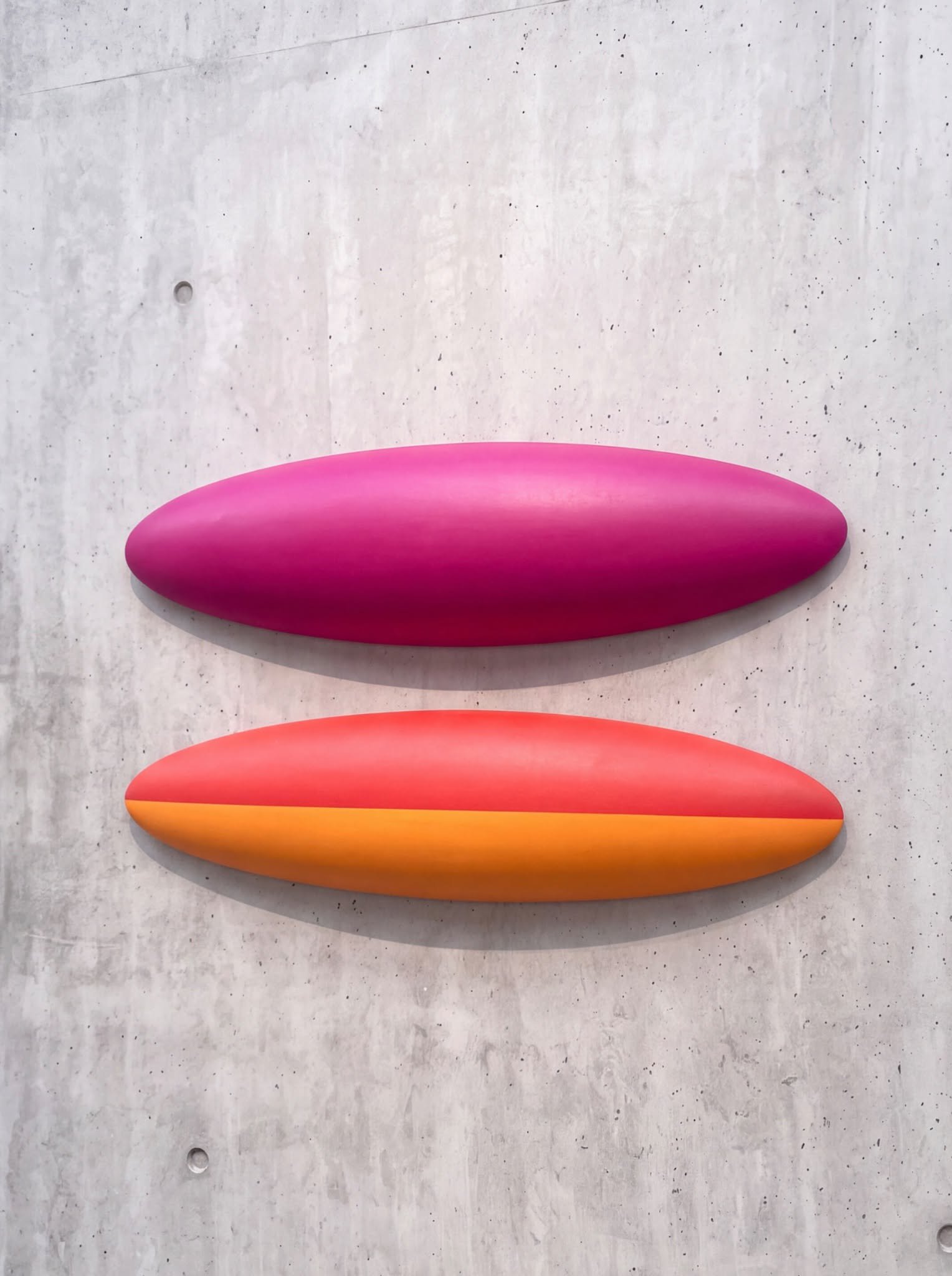
One of Stefan Bächler’s works, “Terron Toggenburg,” demonstrates his ability to approach painting through an unconventional material and format. The work is created using acrylic on Plexyglass and measures 100 cm in width, 20 cm in height, and 10 cm in depth.
The use of Plexyglass gives the piece a contemporary physical presence. Unlike a conventional painting on canvas, the work has substantial depth, allowing it to function not only as an image but also as an object within space.
Its elongated proportions create a distinctive visual format. At one meter wide and only 20 centimeters high, the composition naturally encourages the viewer to move their gaze across the work. The additional 10 centimeters of depth further distinguish it from a conventional two-dimensional painting.
Acrylic is particularly well suited to Bächler’s approach to color. Its ability to produce strong, saturated areas of color complements the artist’s emphasis on hues as expressions of feeling. When combined with his characteristic dark contours, the medium can create a striking relationship between color, form, and line.
Color as an Expression of Emotion
For Bächler, the emotional significance of color is central to the creative process. His belief that each color represents a brushstroke of his soul suggests that his palette is closely connected to his personal experiences and emotional states.
This approach changes the way the viewer can experience his paintings. Rather than asking only what a particular color represents objectively, the viewer can consider how the combination of hues makes them feel.
Bright and subdued tones can coexist with heavy dark outlines, creating moments of contrast and tension. The colors may suggest energy, calm, melancholy, joy, or contemplation, while the strong contours give those emotions a defined visual framework.
In this way, Bächler’s paintings can be viewed as emotional landscapes. Their visual structure provides the foundation, while color supplies the mood.
An Artist and Storyteller
Bächler’s creativity extends beyond visual art. Since 2009, he has published numerous children’s books as both an author and illustrator.
This aspect of his career reveals his strong connection to storytelling and imagination. Writing and illustrating for children requires an ability to communicate ideas through accessible imagery while preserving a sense of wonder. Bächler’s experience in this field adds another dimension to his understanding of visual communication.
His children’s books and paintings may exist in different creative contexts, but both demonstrate his interest in transforming imagination into tangible forms. Whether through a painted composition, a silhouette, or an illustrated story, Bächler uses visual language to invite audiences into another world.
A Career Across European Art Spaces
Since his first solo exhibition in 1992, Bächler has presented his work throughout Europe. His exhibitions at institutions including the Hans Erni Museum and the Museum des Pays-d’Enhaut reflect the recognition his multidisciplinary practice has received.
His exhibition history also mirrors the diversity of his artistic career. He has never been defined solely by one medium or one approach. Instead, his work has developed through a continuous process of experimentation.
This openness is an important part of what makes his career distinctive. Bächler has moved between painting, paper cutting, performance, silhouette art, illustration, and literature, allowing each discipline to inform the others.
Stefan Bächler’s Continuing Artistic Journey
Stefan Bächler’s career demonstrates how an artist can build a recognizable identity while continually changing creative direction. Under the name MINO, he has explored numerous forms of artistic expression while maintaining a consistent interest in shape, color, imagination, and emotion.
From the record-setting silhouette work of 1998 to his paintings, performances, and children’s books, his career reflects a willingness to experiment and discover new possibilities.
“Terron Toggenburg” represents one expression of this continuing exploration. Through acrylic, Plexyglass, strong contours, expressive color, and dimensional form, the work reflects Bächler’s ability to move beyond conventional definitions of painting.
Living and working in Zurich and on Lake Maggiore, Stefan Bächler continues to create from a position where different artistic disciplines intersect. His work demonstrates that painting can be more than an arrangement of shapes and colors. It can become a record of emotion, an exploration of imagination, and a personal language through which an artist communicates with the world.
